


True rarity in haute horlogerie is not simply measured by complication or precious materials. Sometimes, it is defined by an entirely unexpected form of craftsmanship. Vacheron Constantin’s latest Métiers d’Art collection embraces precisely that philosophy, bringing six remarkable artistic disciplines into the world of fine watchmaking.

Created under the Maison’s “One of Not Many Crafts” programme, Métiers d’Art Tribute to the Animal Kingdompresents six one-of-a-kind interpretations of the natural world. Each timepiece pairs an animal motif with an artisanal technique rarely, if ever, seen within traditional watchmaking.
Vacheron Constantin has spent centuries establishing itself among the foremost practitioners of decorative watchmaking, from engraving and enamelling to guilloché and other painstaking métiers d’art. This collection takes that heritage in a decidedly unconventional direction, collaborating with six artisans whose specialist techniques have been reimagined for an extraordinarily small canvas.
The challenge was considerable. Each watch measures 42mm in diameter and offers only a narrow space between the dial and sapphire crystal. Translating crafts normally practiced on a much larger scale demanded extraordinary precision, with some techniques requiring entirely new tools, methods and approaches to achieve the desired effect.
The resulting six creations could hardly be more individual.
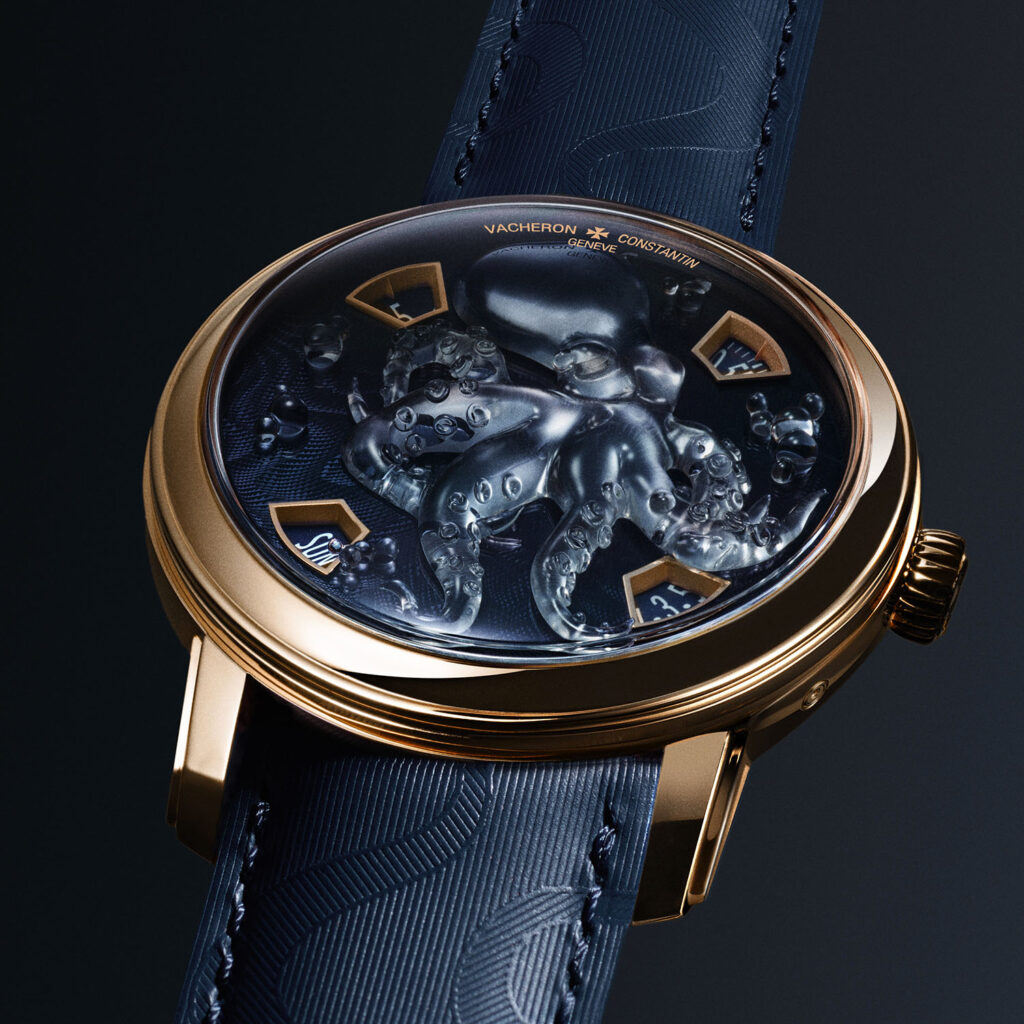
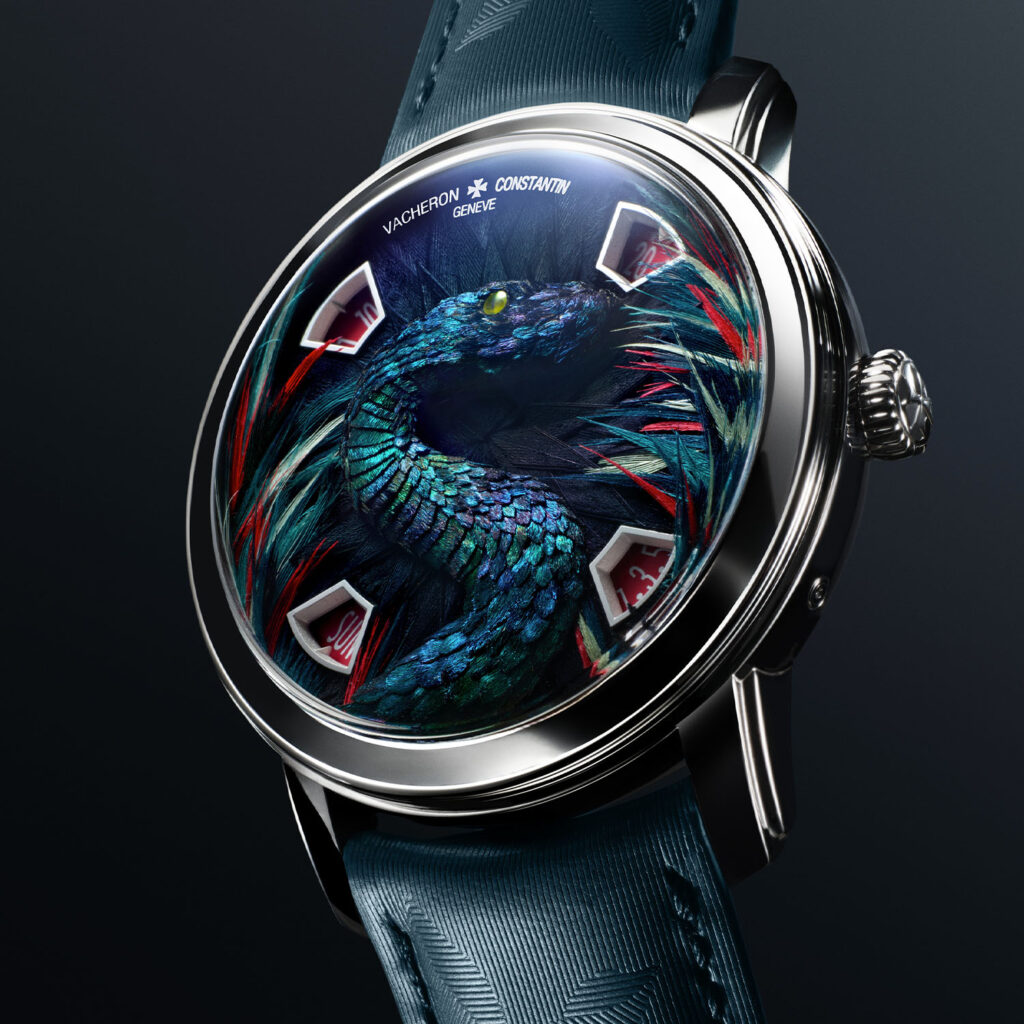
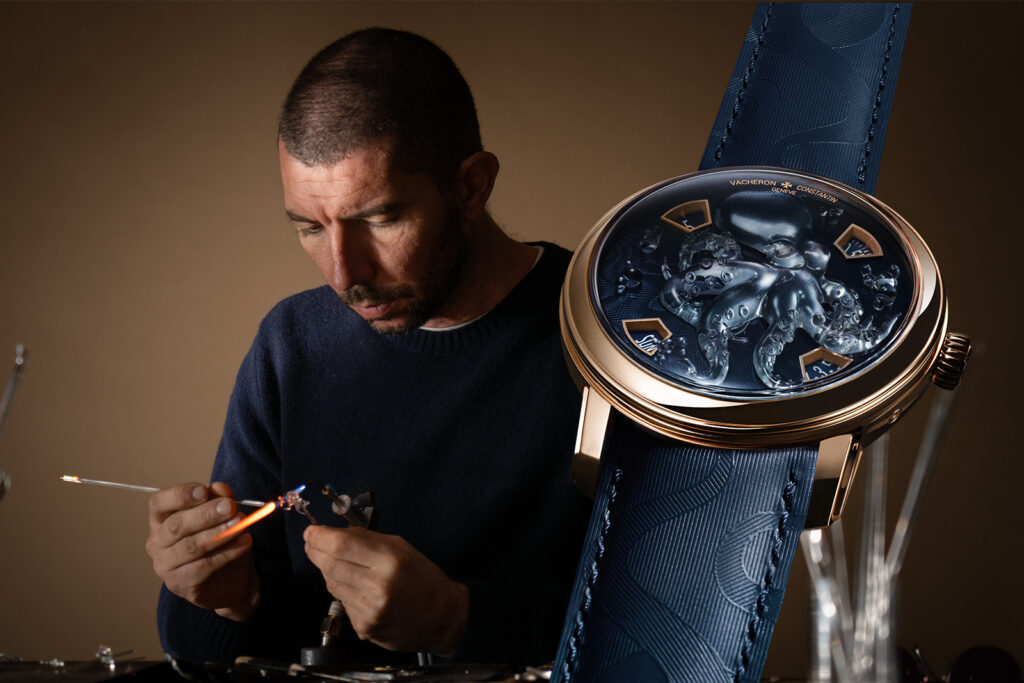
Feathersnake transforms delicate feathers into a sculptural, three dimensional serpent, creating remarkable texture and depth across the dial. Glassoctopus, meanwhile, features a miniature octopus painstakingly sculpted from glass, giving the marine creature an almost lifelike presence.
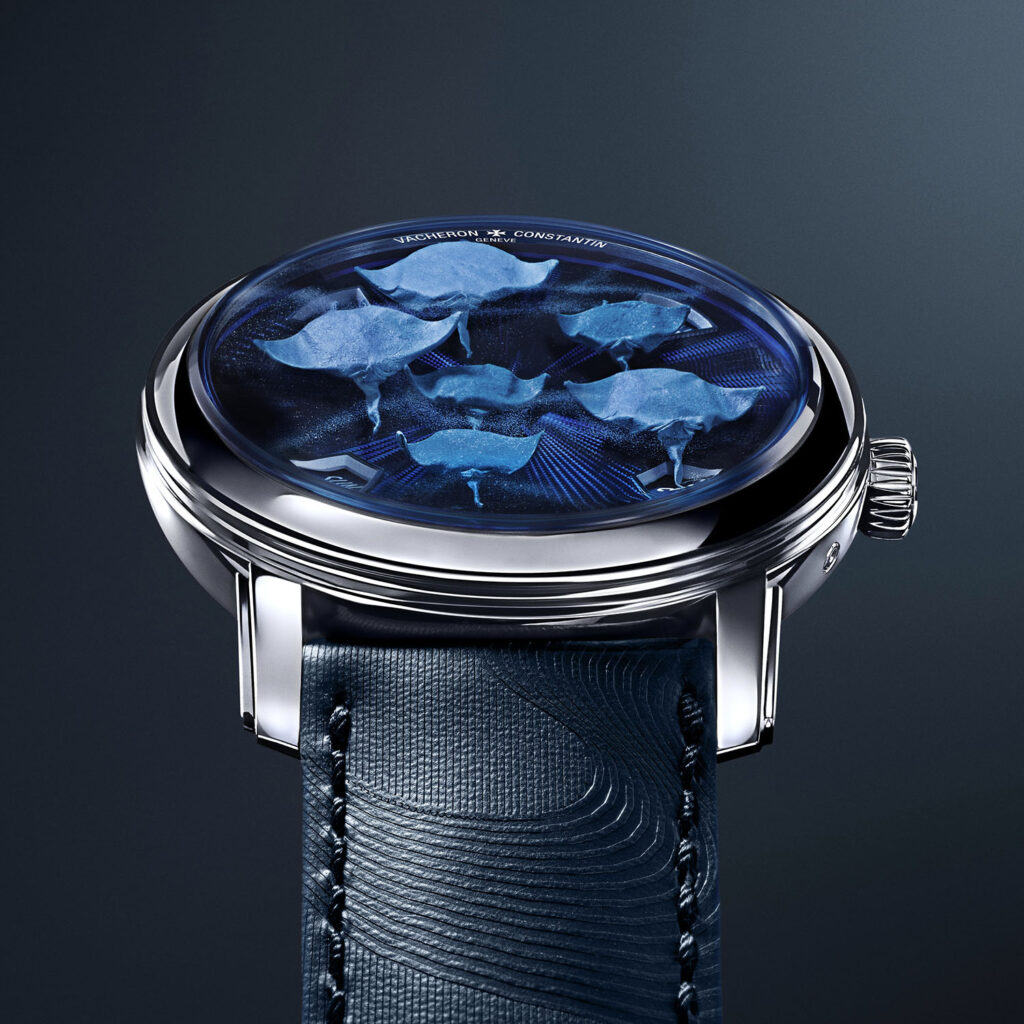
In Oraygami, the centuries-old Japanese tradition of origami becomes an intricate composition of six miniature manta rays. Tigerbroidery takes another unconventional route, combining finely worked gold embroidery with silk to depict its majestic animal subject.
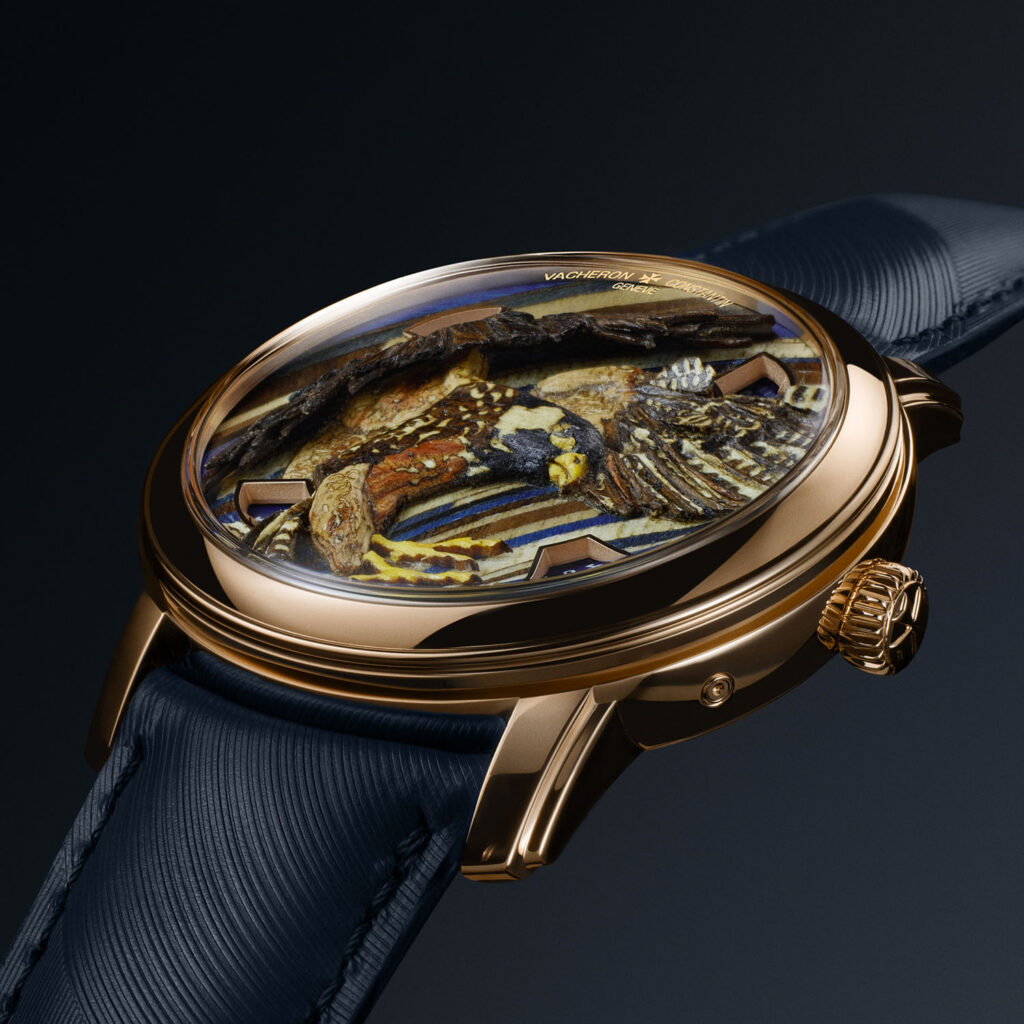
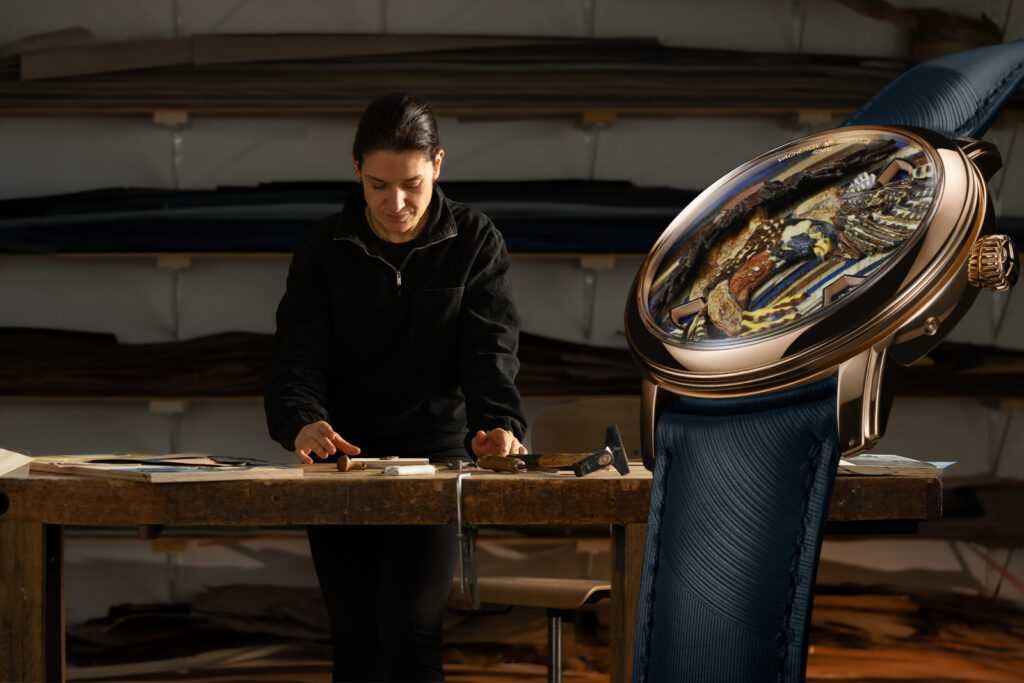
The collection’s final two interpretations explore paper and wood. Papercroc uses layers of embossed and precisely cut paper in a restrained white on white composition to reveal the form of a crocodile. Woodenwings employs miniature marquetry, carefully combining different species of wood to construct an intricate natural tableau.
Together, the six watches demonstrate just how far the boundaries of Métiers d’Art can be pushed when traditional craftsmanship meets haute horlogerie.
Art at the Heart of Time
Despite their radically different artistic treatments, all six watches are united by a shared technical foundation. Each is housed in a 42mm case measuring 12.9mm thick, crafted from either 18-karat white gold or 18-karat 5N pink gold depending on the model.

At their heart is Vacheron Constantin’s automatic Calibre 2460 G4, a movement already associated with some of the Maison’s most ambitious Métiers d’Art creations, including the Legend of the Chinese Zodiac and Tribute to Great Civilisations collections.
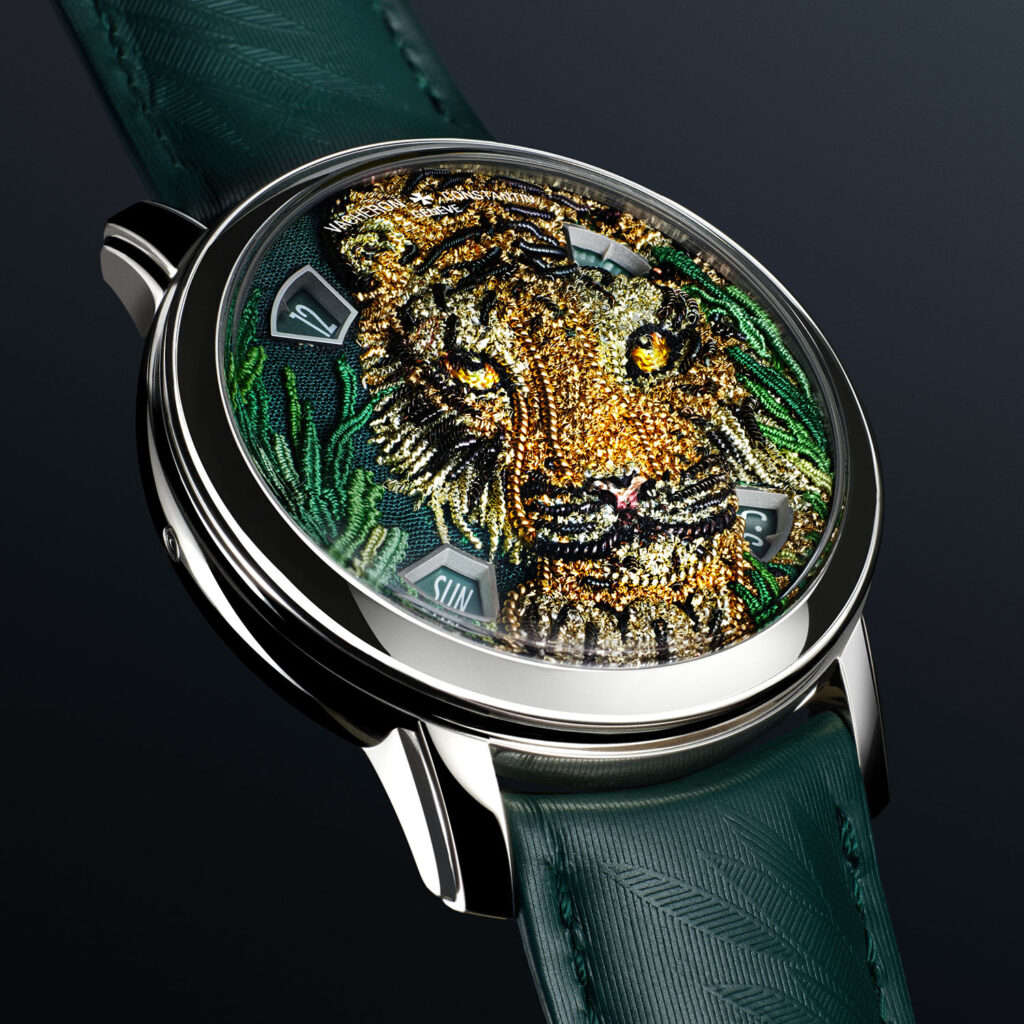
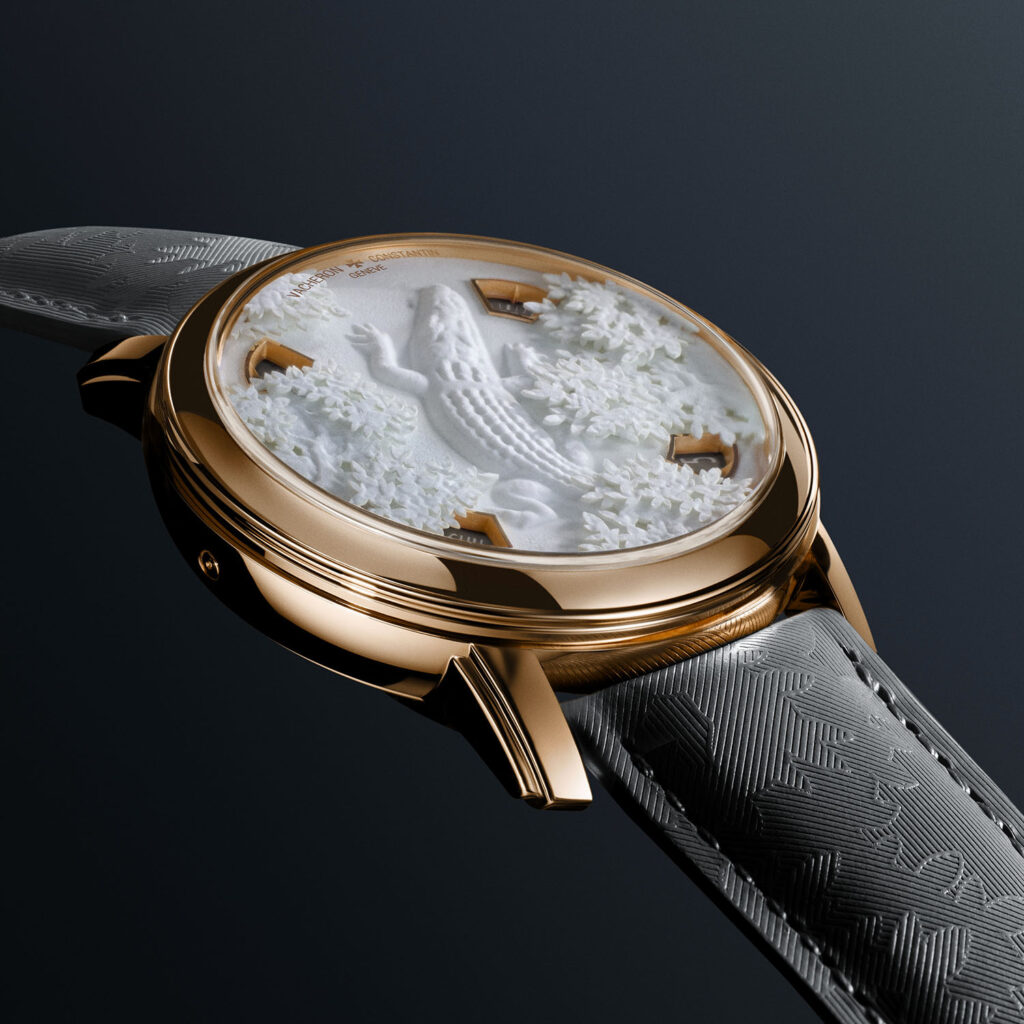
Its architecture is particularly well suited to this project. Rather than placing conventional indications across the centre of the dial, the movement displays the hours, minutes, day and date through four discreet apertures positioned around its perimeter. The centre is consequently left almost entirely open, allowing the artisanal artwork to command attention.
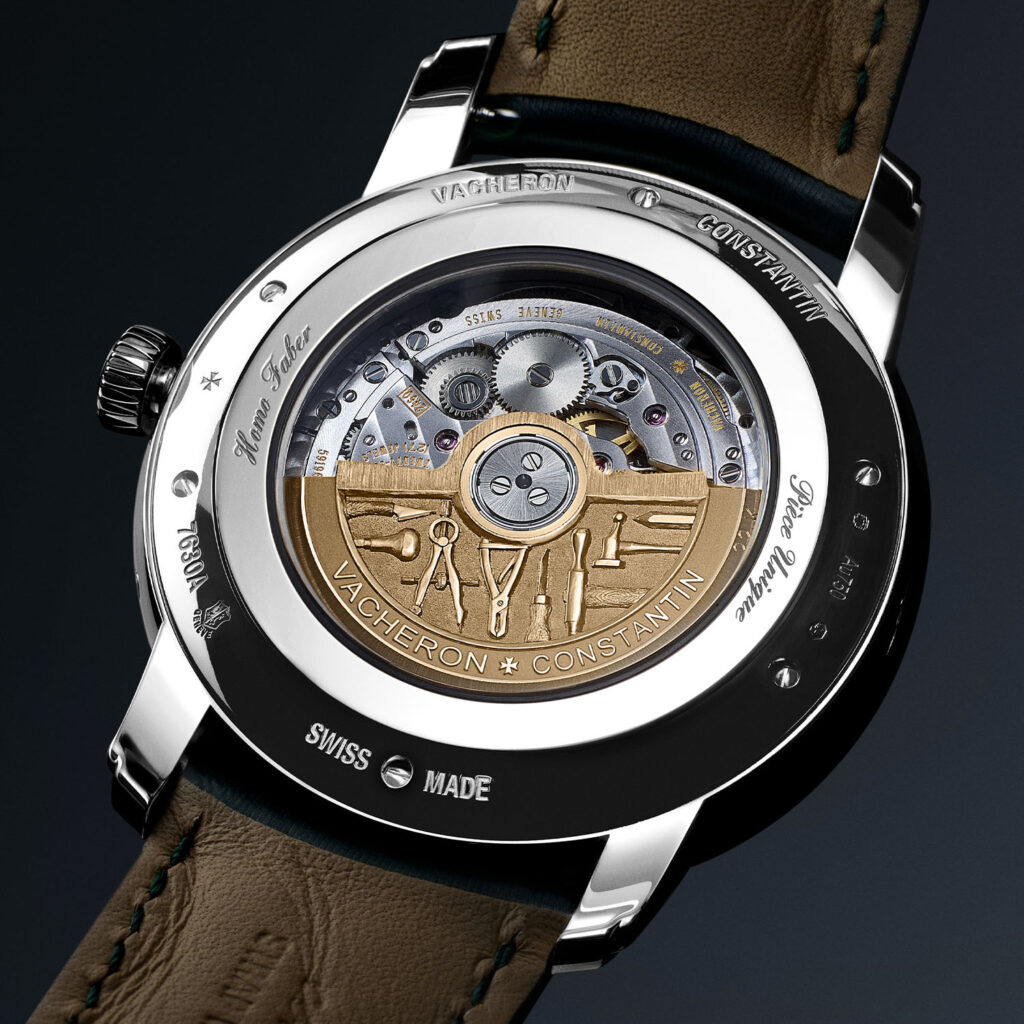
Turn the watch over and the artistic narrative continues. Through the sapphire crystal caseback, the movement reveals a specially created 22-karat gold oscillating weight, hand-engraved with motifs inspired by the tools and techniques employed by the six participating artisans.
Completing each creation is a calfskin strap featuring embossed details that subtly echo the artistic language of its corresponding dial.
With pricing available upon request, Vacheron Constantin’s Métiers d’Art Tribute to the Animal Kingdom is less a conventional watch collection than a celebration of craftsmanship itself six highly individual expressions demonstrating that, at the highest level of watchmaking, virtually any artistic discipline can become an instrument for measuring time.