

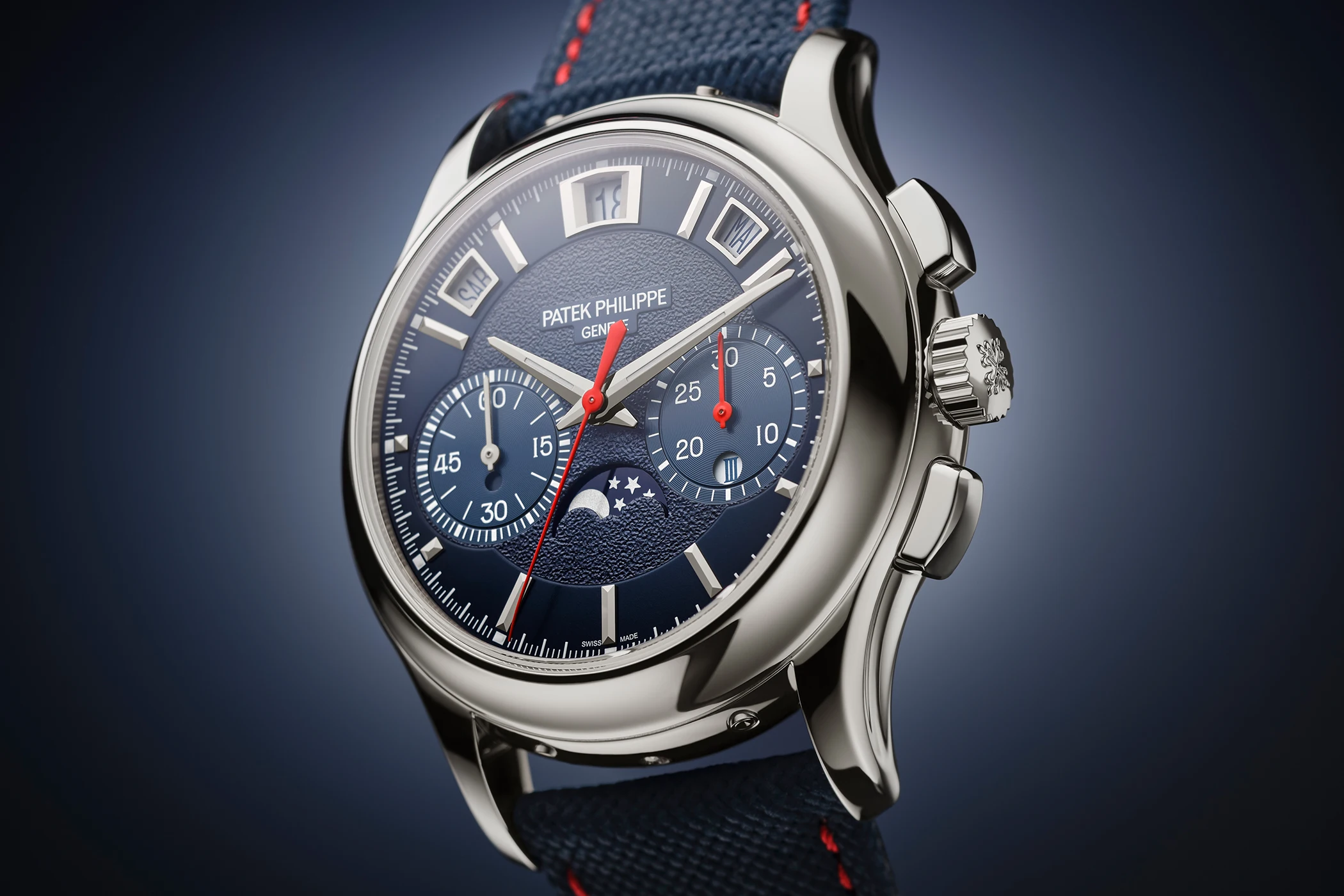
Patek Philippe has unveiled a new expression of horological mastery with the Reference 5978P-010, a platinum grand complication that brings together a hand-wound chronograph and an instantaneous perpetual calendar within a 42mm Calatrava case. Presented at the Watch Art Grand Exhibition in Milan, the timepiece represents a significant new chapter in the manufacture’s long history of combining its most demanding complications. Created exclusively for the Italian market and limited to just 120 examples, the Reference 5978P-010 is powered by the newly developed Caliber CH 29-535 PS QI. The pairing has deep roots within Patek Philippe’s history, reaching back to 1941 and the Reference 1518, the world’s first serially produced wristwatch to combine a perpetual calendar and chronograph. More than eight decades later, that pioneering formula remains central to the brand’s Grand Complication collection, now interpreted through a movement designed to deliver an extraordinary level of instantaneous performance.
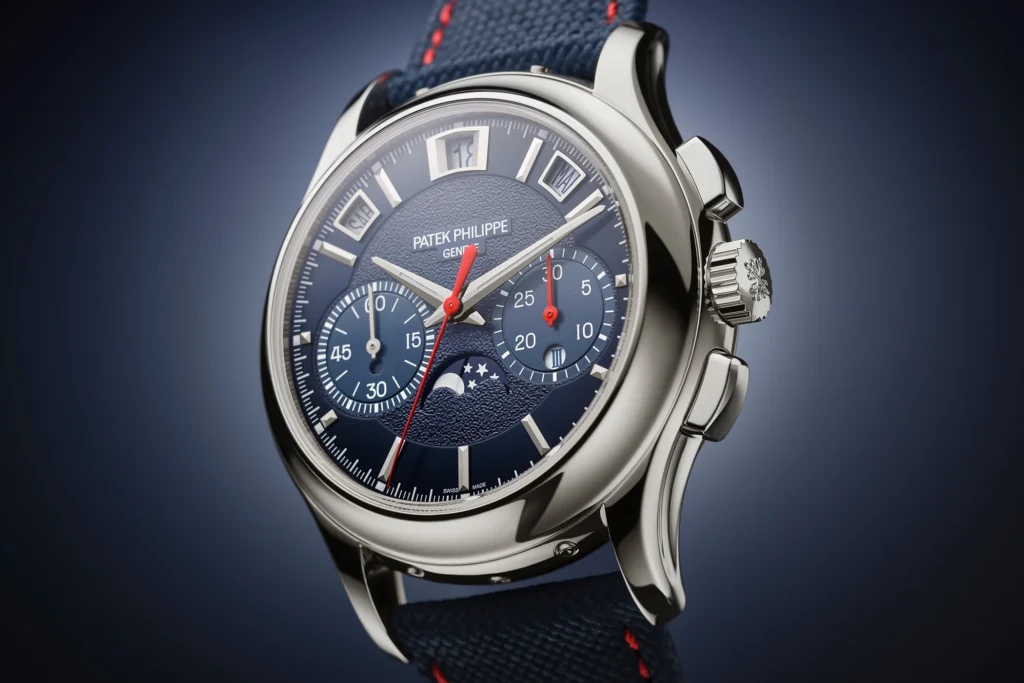
The defining technical achievement of the Reference 5978P-010 is its instantaneous perpetual calendar. Rather than allowing the calendar indications to advance progressively around midnight, the mechanism stores energy before releasing it in a remarkably brief burst. The day, date, month and leap-year indications change simultaneously in approximately 30 milliseconds, even when the movement retains only around ten hours of power reserve. The mechanism traces its lineage to Patek Philippe’s Reference 5207, introduced in 2008, and subsequently appeared in the References 5208 and 5308. Such speed requires considerable mechanical energy because the calendar information is displayed through disks rather than lightweight hands. Energy is accumulated over several hours before being released almost instantaneously at midnight. A sophisticated 15-part lever coordinates the synchronized transition, while two opposing jumper springs regulate the energy required for each calendar change. The system is also engineered to accommodate the different transitions required throughout the year, from the one-day change following a 31-day month to the substantially longer transition after February in a common year.
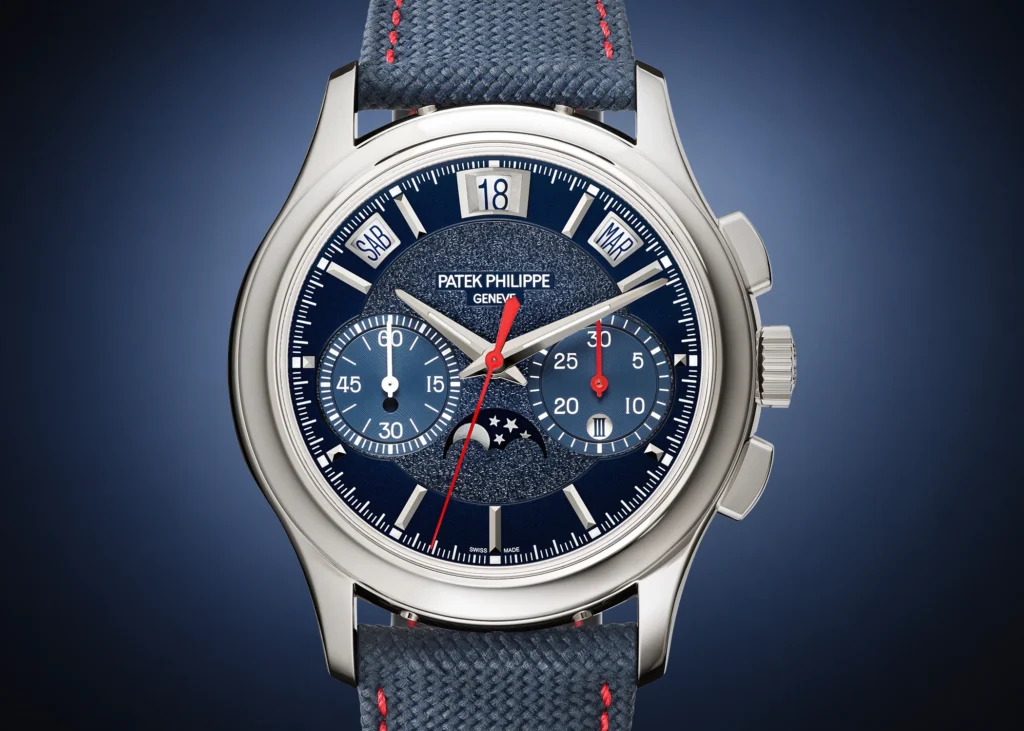
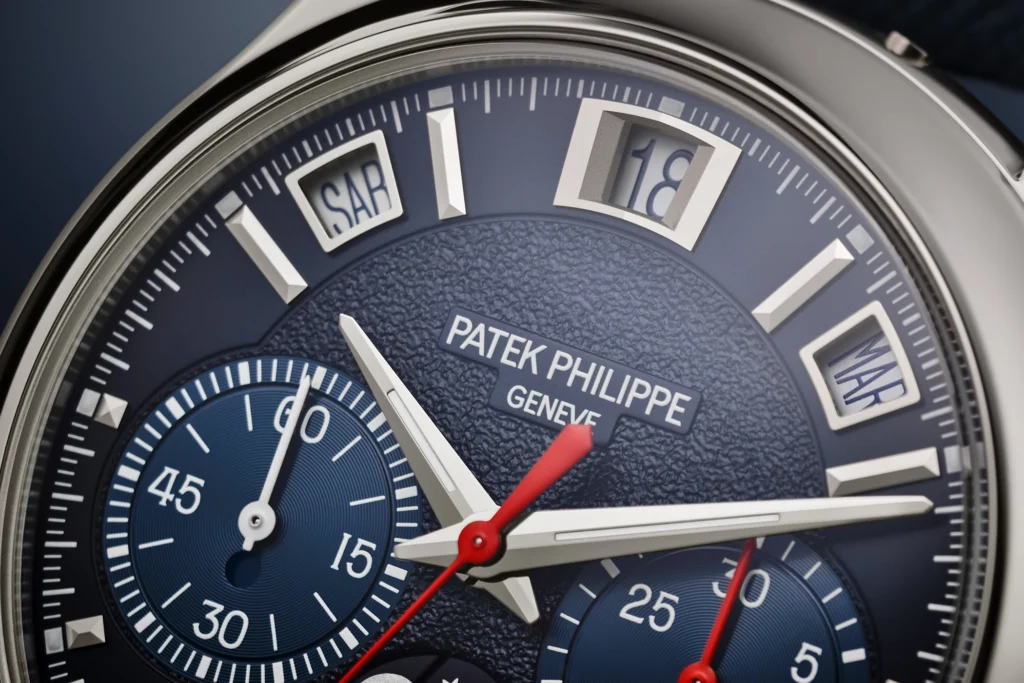
The complexity of the mechanism is reflected in the architecture of the dial. Three apertures displaying the day, date and month sweep across the upper portion of the dial between 10 and 2 o’clock, with the indications presented in Italian specifically for this edition. The larger central date aperture is framed by the smaller day and month displays, while a moon-phase indication occupies 6 o’clock. Circular apertures at 3 and 9 o’clock display the day/night cycle and leap-year indication. Patek Philippe creates additional depth through a sophisticated combination of finishes, with a navy-blue sunburst surface gradually transitioning into a black outer gradient and a subtly concave, textured center. The subsidiary displays sit on separate levels and feature snailed decoration, while faceted white-gold hour markers and dauphine hands provide a crisp contrast. Luminescent treatment enhances legibility, and red lacquer on the central chronograph seconds hand and 30-minute counter introduces a restrained but vivid accent.
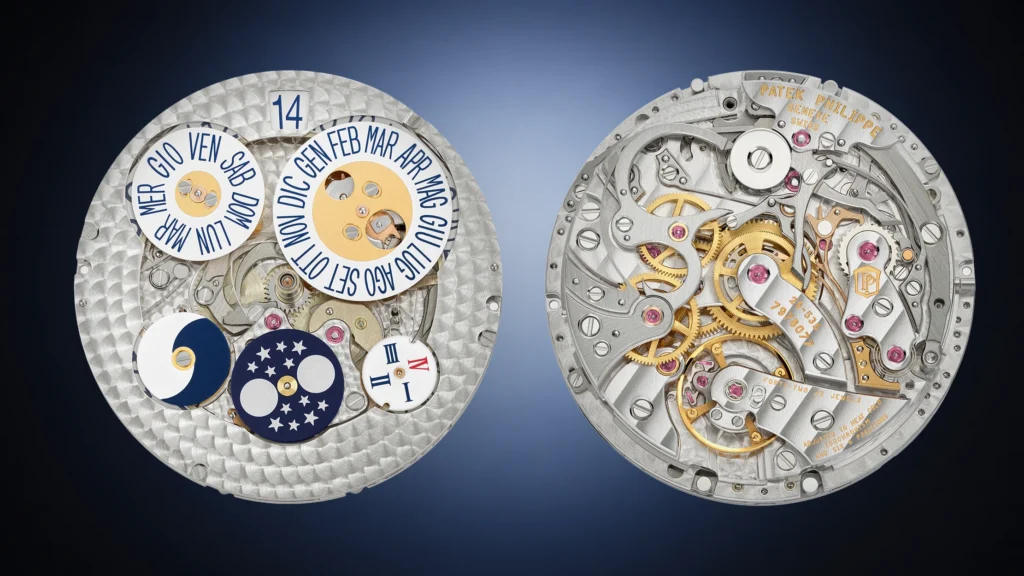
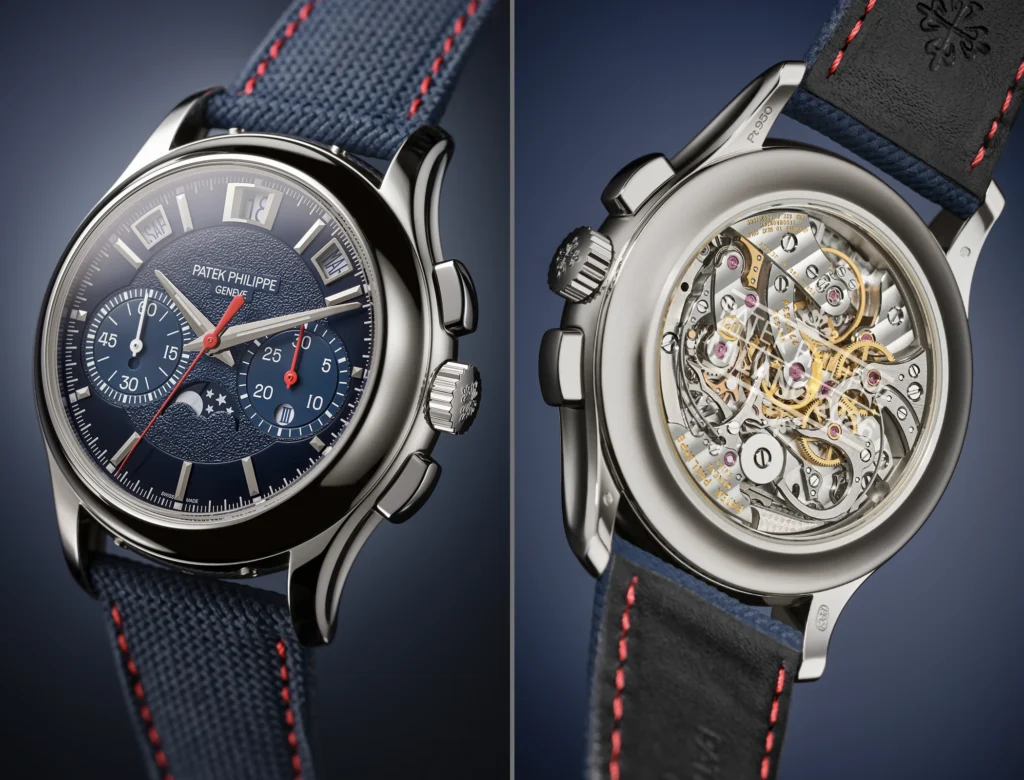
The chronograph side of the new Caliber CH 29-535 PS QI draws from the architecture of the manually wound CH 29-535 PS introduced in 2009, preserving the traditional construction associated with Patek Philippe’s hand-wound chronographs. A column wheel with a polished protective cap works with a horizontal tooth-wheel clutch, while carefully engineered profiles on the chronograph drive wheel, clutch wheel and chronograph wheel reduce wear, improve energy transmission and eliminate undesirable point-to-point contact. Instead of conventional eccentric adjustment, the movement employs a large eccentric cap positioned on the column wheel to determine the extreme position of the clutch lever and enable more precise regulation. Other technical features include self-adjusting zero-reset hammers mounted between jewels, direct synchronization between the clutch lever and brake, and an open-worked minute-counter cam designed to absorb shocks during the reset operation. Comprising approximately 500 components, the movement pairs a four-arm Gyromax balance with four inertia blocks and a Breguet overcoil balance spring. Operating at 4 Hz, or 28,800 vibrations per hour, it provides approximately 55 to 65 hours of power reserve when the chronograph is disengaged. Through the sapphire crystal case back, the intricate architecture and extensive hand-finishing can be admired in accordance with the exacting standards of the Patek Philippe Seal.
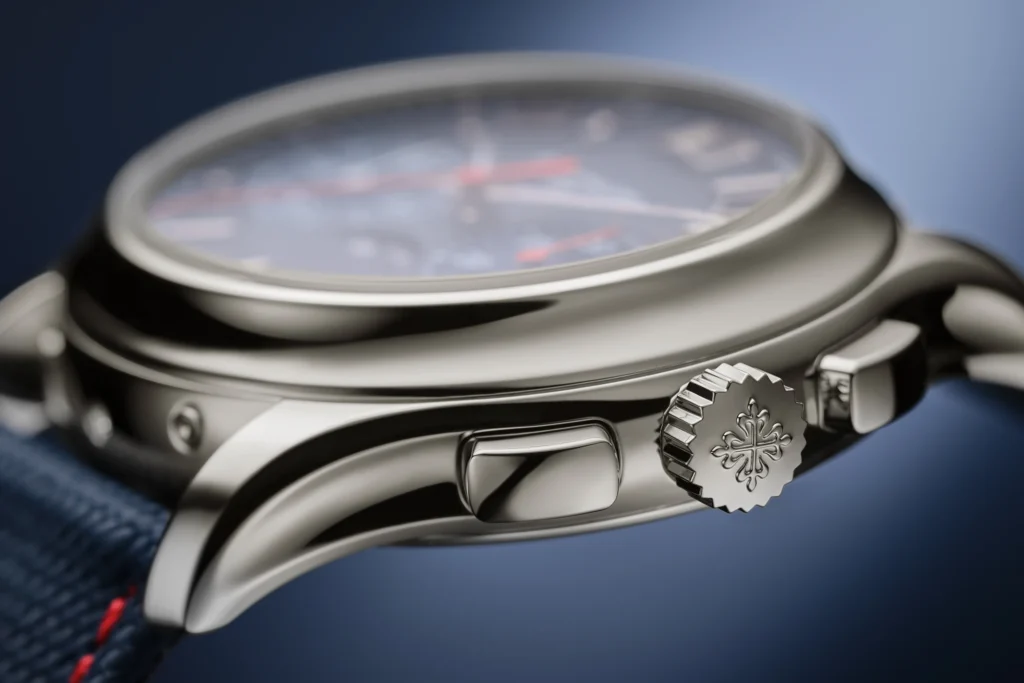
The movement is housed within a 42mm case crafted from 950 platinum, giving the watch a substantial yet refined presence on the wrist. The fully polished case features a concave bezel and sculpted, inward-curving hollowed lugs, while rectangular chronograph pushers follow the contours of the case. In keeping with Patek Philippe tradition, a discreet brilliant-cut diamond is set at 6 o’clock as the signature of its platinum watches. Completing the composition is a navy-blue composite strap with a textile-inspired motif and contrasting red stitching, secured by a platinum triple-blade fold-over safety clasp. Limited to 120 pieces and reserved exclusively for the Italian market, the Reference 5978P-010 brings together historical pedigree, mechanical ingenuity and contemporary refinement in one of Patek Philippe’s most technically ambitious Calatrava creations. With a price of $337,585, it stands as a particularly rare interpretation of the perpetual-calendar chronograph an enduring expression of the manufacture’s ability to transform extraordinary mechanical complexity into something that appears almost effortless.