
Some cars are designed to be driven. Others are created to explore what may be possible. The Mercedes-Benz C 111-II belongs to the latter category: a dramatic experimental coupé conceived as a showcase for new engineering, yet so captivating that the public repeatedly asked Mercedes-Benz to put it into production. The company declined even when prospective buyers offered blank cheques.
The story began in 1969, when Mercedes-Benz revealed the original C 111. Its striking form and advanced engineering stirred such interest that the marque was soon fielding offers from would-be owners. The answer remained no. When the more developed C 111-II appeared just months later, the response was the same. These were not production cars awaiting a fortunate buyer; they were rolling laboratories, built to demonstrate the company’s ideas and test the limits of performance.
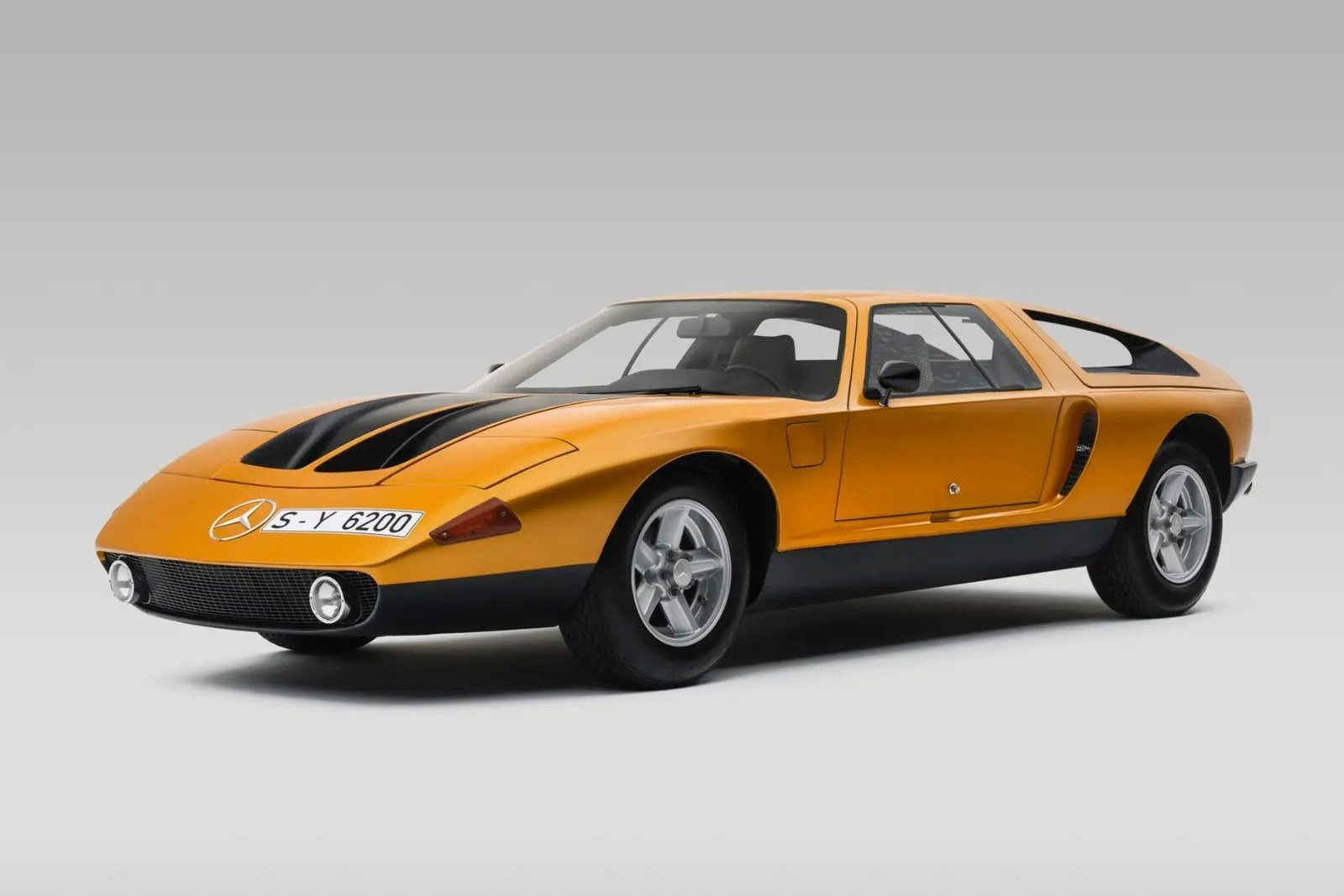
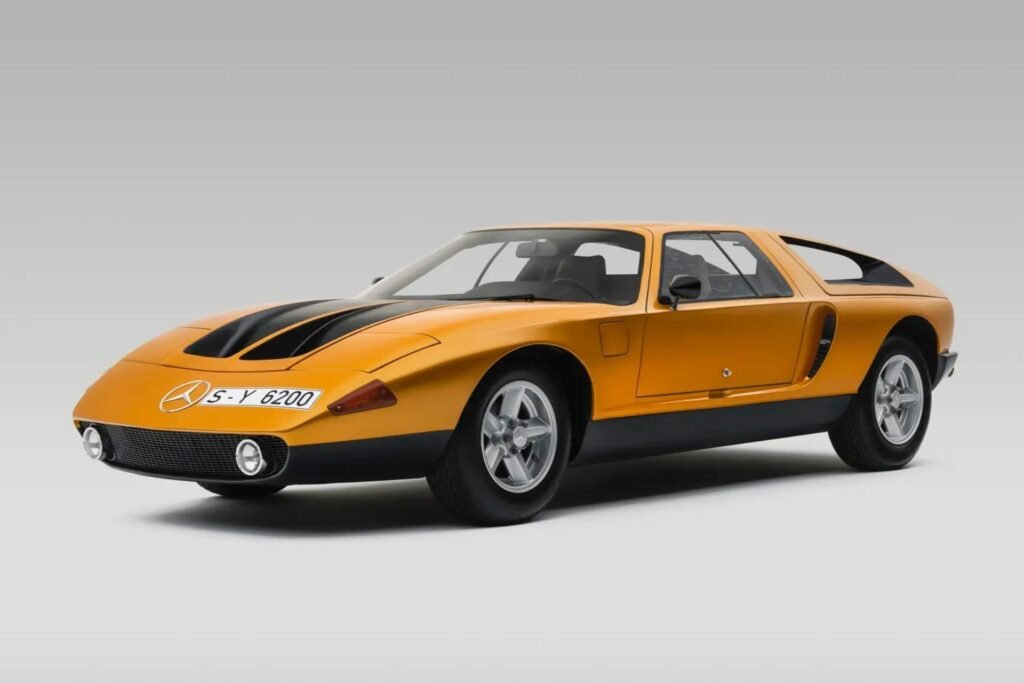
This C 111-II makes its intentions clear from the first glance. Its vivid metallic-orange body, low stance and upward-opening gullwing doors give it the presence of a concept car made real. Inside, houndstooth upholstery brings a distinctly period character to the cockpit, contrasting with the experimental engineering beneath the sculpted bodywork. The result is a machine that feels both futuristic and unmistakably of its era.
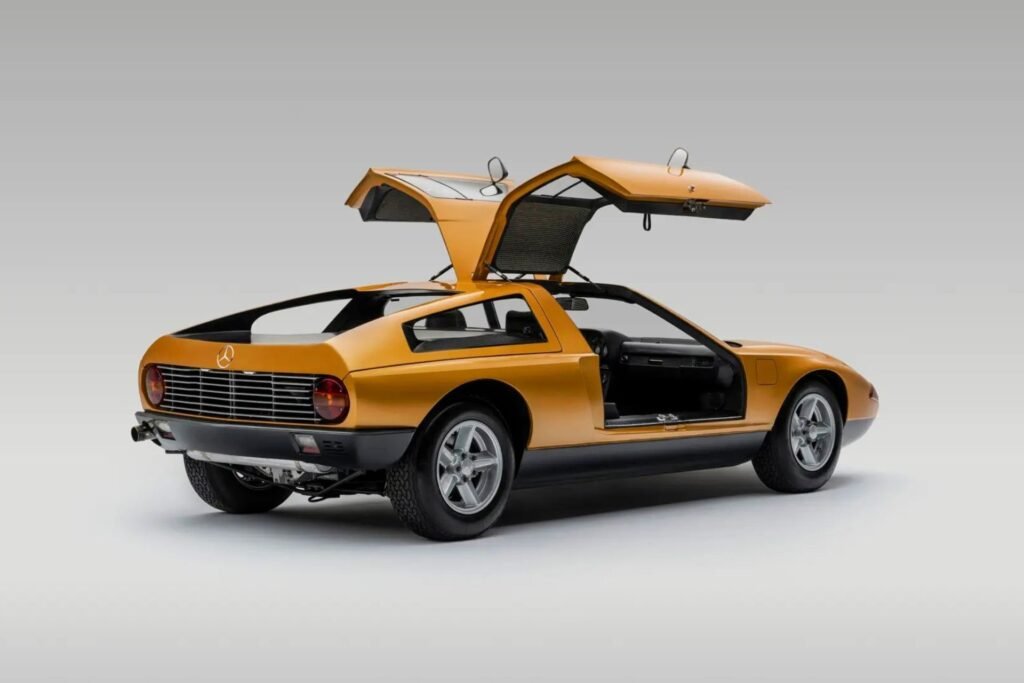
At its heart sits a mid-mounted four-rotor Wankel rotary engine, producing 350 horsepower and capable of reaching 9,000 rpm. The compact rotary unit was central to the C 111 programme, which explored the potential of an alternative engine architecture at a time when manufacturers were searching for new routes to power and efficiency. In the C 111-II, the engine’s position and high-revving character contribute to a thoroughly unconventional package one that was built to be examined, tested and driven, rather than simply admired from a stand.
Chassis 33 has gathered a history that extends well beyond the test track. It appeared in the first German edition of Playboy, placing the car at the intersection of design, performance and popular culture. It was also driven by Herbert von Karajan, the celebrated conductor of the Berlin Philharmonic, whose reputation for precision and intensity seems a fitting match for the car’s exacting character.
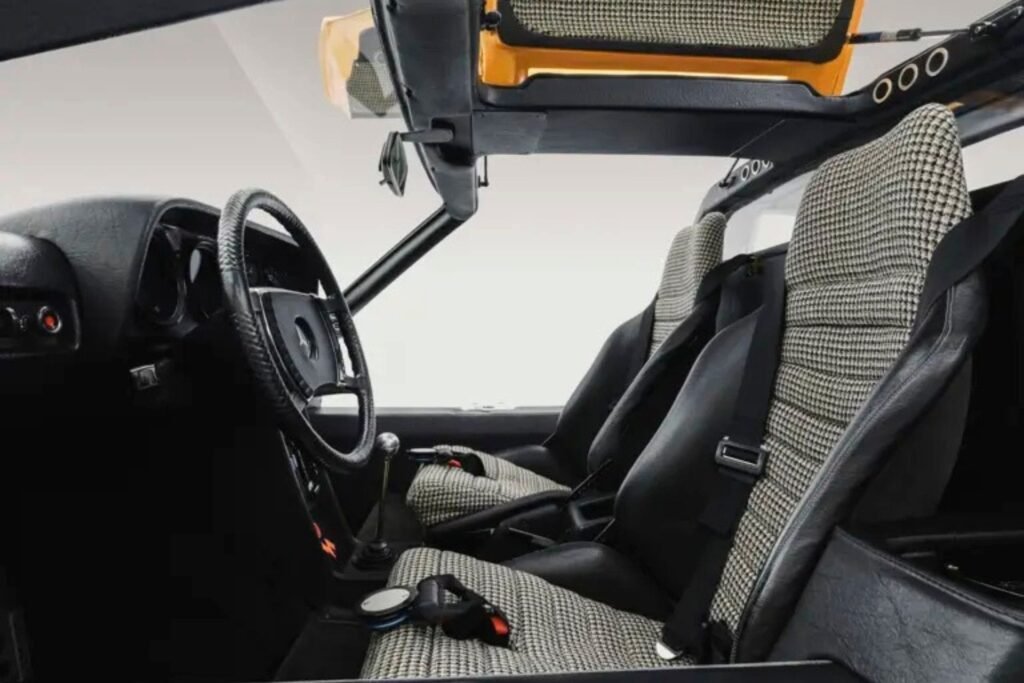
For nearly two decades, the C 111-II was displayed at the Mercedes-Benz Museum, where it stood as one of the most evocative expressions of the marque’s experimental past. Then came an unexpected return to the road. Mercedes-AMG Petronas Formula One driver George Russell took the car onto Silverstone for a practice day, giving the long-admired prototype a chance to move under its own power in the hands of a modern racing driver. It was a rare moment for a machine that had spent so much of its life as an object of fascination behind museum doors.
Now, this C 111-II is set to enter the auction market, marking an extraordinary opportunity: it is the first C 111 offered for private purchase. For collectors, the significance lies not only in its rarity, but in its place within Mercedes-Benz history. The car embodies a period when the marque was willing to explore an entirely different kind of engine, shape and driving experience and when the resulting prototype became so desirable that even a blank cheque could not secure one.
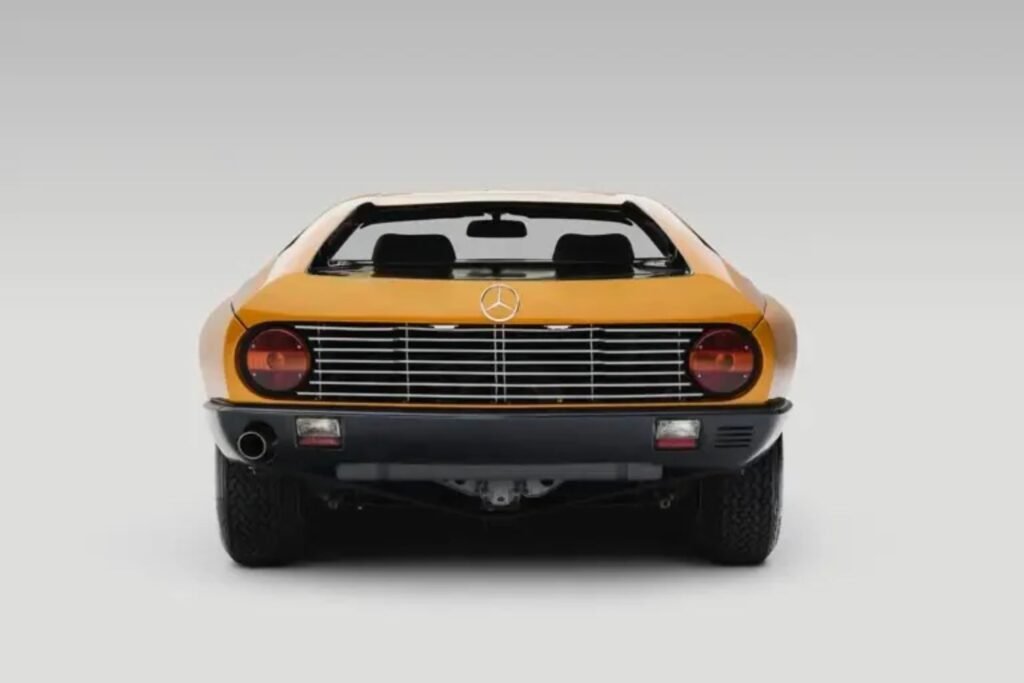
With its vivid orange finish, gullwing silhouette, four-rotor engine and remarkable associations, chassis 33 is more than a celebrated showpiece. It is a piece of automotive history that was never meant to belong to anyone outside Mercedes-Benz. Its forthcoming sale offers a rare chance to change that.