
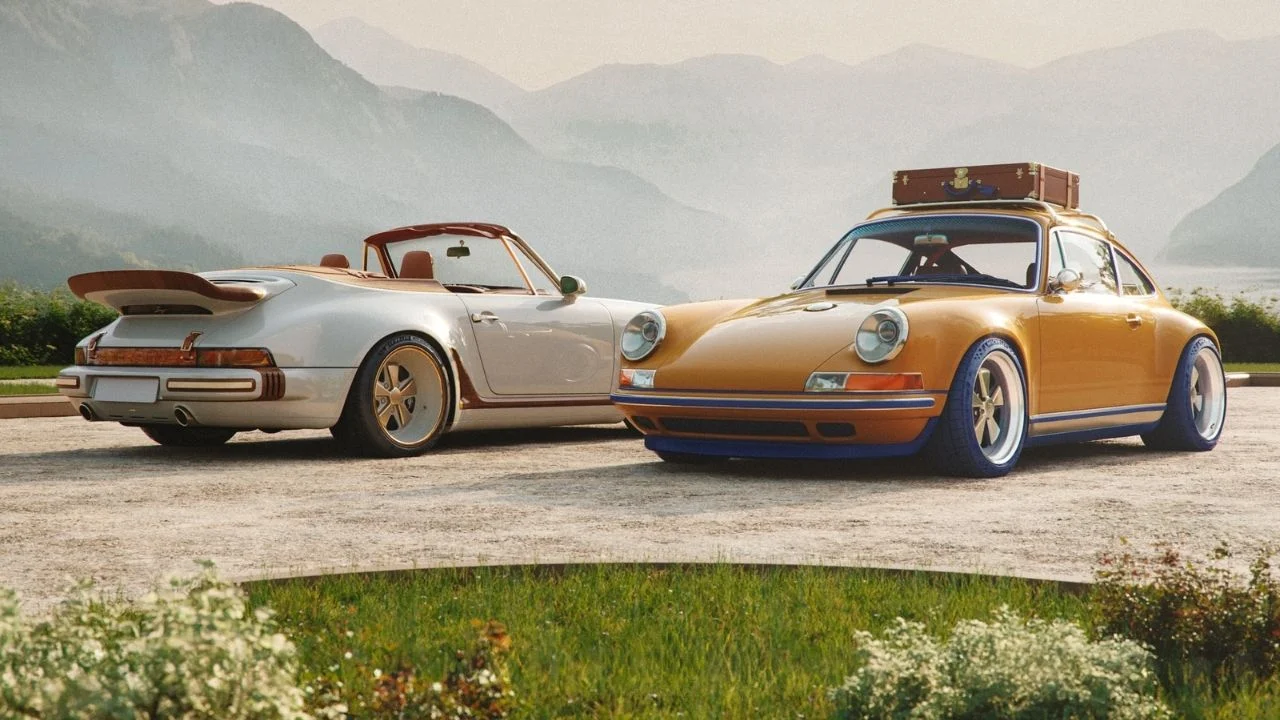
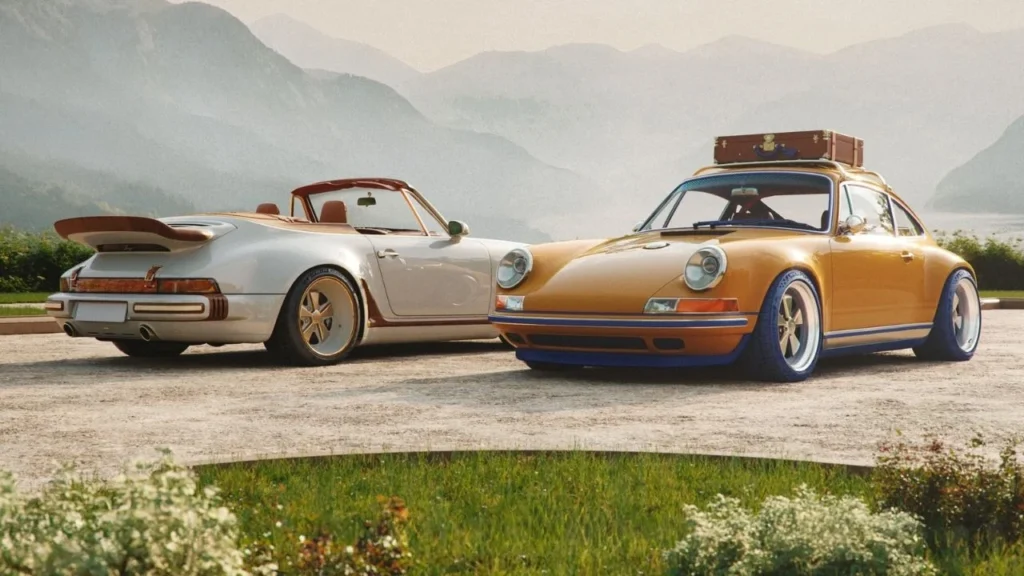
Louis Vuitton’s philosophy of travel takes on a new form through an ambitious collaboration with California-based Singer Vehicle Design, bringing together the worlds of automotive design, haute craftsmanship, watchmaking, leather artistry and bespoke luggage. The partnership centers on two Porsche 911s reimagined by Singer one a Classic and the other a Classic Turbo each conceived as a distinct expression of the Louis Vuitton universe.
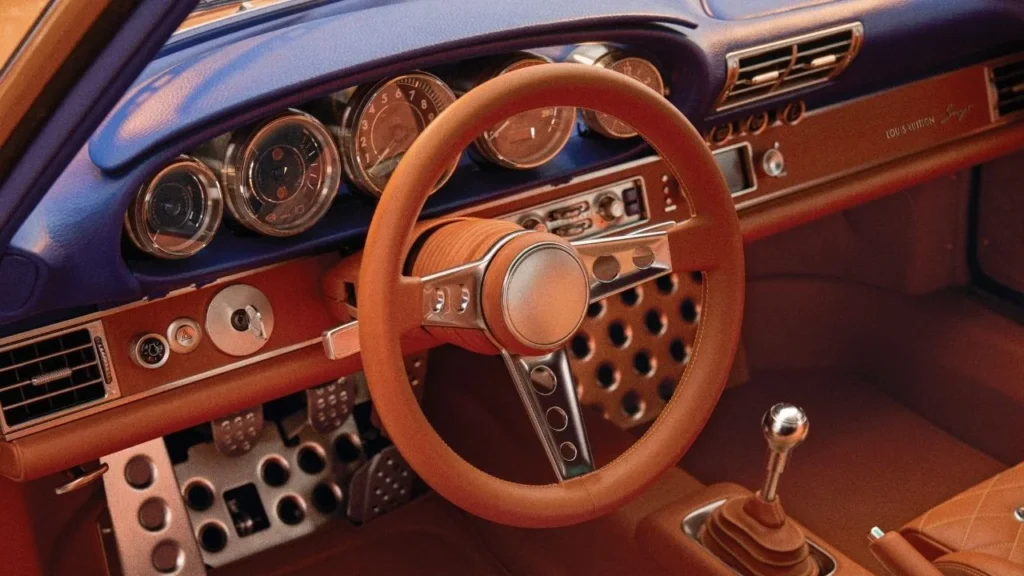
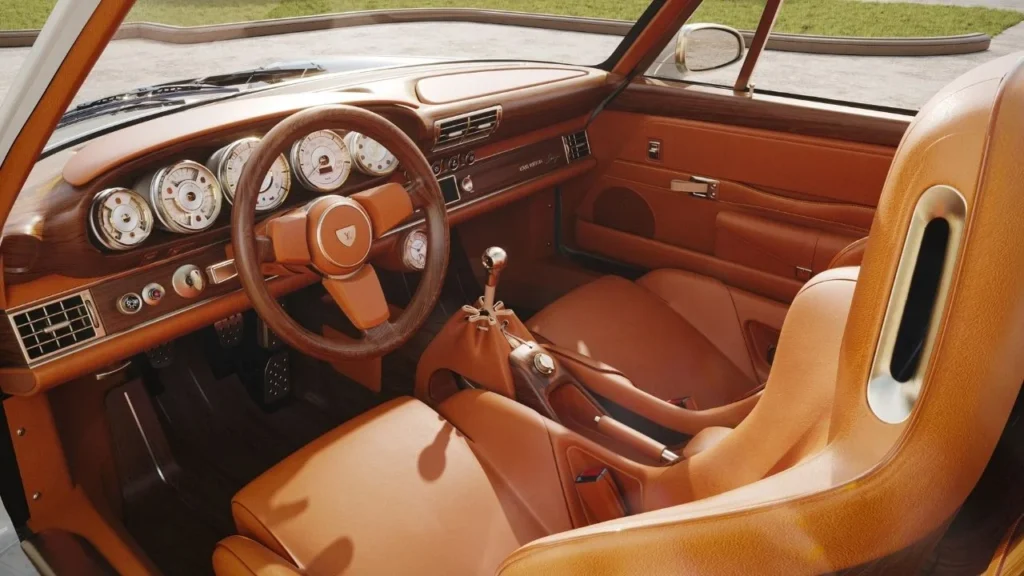
What began with a deceptively simple idea a dashboard clock soon evolved into a much more comprehensive design dialogue. La Fabrique du Temps Louis Vuitton developed a removable mechanical timepiece inspired by the House’s Tambour watch. Around its bezel, twelve polished and engraved letters spell out the Louis Vuitton name, transforming a functional instrument into a finely crafted object. That philosophy was subsequently carried throughout the cockpit, influencing the instrument cluster, speedometer, tachometer, gauges and numerous interior details.
Two Cars, Two Mechanical Personalities
Beneath the craftsmanship, the two commissions take distinctly different approaches to performance.
The Porsche 911 Reimagined by Singer Classic is powered by a 4.0-liter naturally aspirated flat-six. Based on the available information, the engine appears to be closely related to the unit Singer has used in its recently reimagined Cabriolet models. It produces approximately 420 horsepower and combines water-cooled cylinder heads with air-cooled cylinders, along with variable valve timing. Power is delivered through a six-speed manual transmission to the rear wheels, while carbon-ceramic brakes provide the stopping power expected from a modern interpretation of the iconic 911.
The result is a mechanical character that feels deliberately analog. Rather than overwhelming the driving experience with outright power, the Classic emphasizes balance, engagement and the connection between driver and machine—qualities that align naturally with Singer’s philosophy of reimagining the classic Porsche for contemporary use.
The Classic Turbo takes a more forceful approach. Its motivation comes from a twin-turbocharged 3.8-liter flat-sixequipped with air-to-water intercooling. The engine is paired with a six-speed manual gearbox and carbon-ceramic braking system, while selectable driving modes introduce an additional layer of adaptability. Exact output figures have not been publicly specified for this particular commission, although the car is expected to be in the region of 510 horsepowerif it uses Singer’s more powerful configuration.
The contrast between the two cars is intentional. The Classic celebrates the purity of a naturally aspirated, rear-wheel-drive sports car, while the Classic Turbo adds forced induction, greater performance and additional control over the driving character. In both cases, the mechanical specification remains closely tied to the tactile experience of a manual Porsche.
A New Language of Automotive Luxury
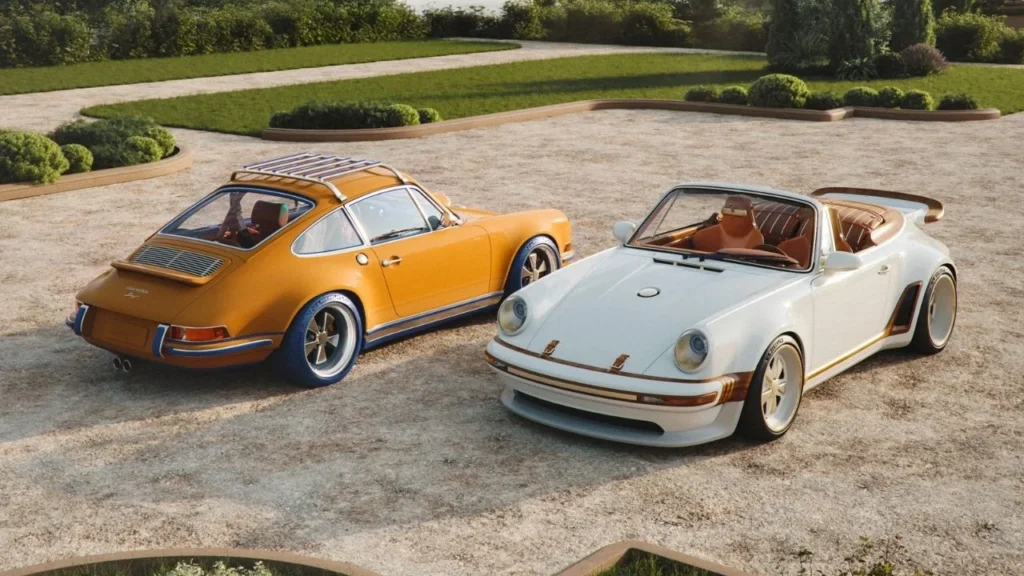
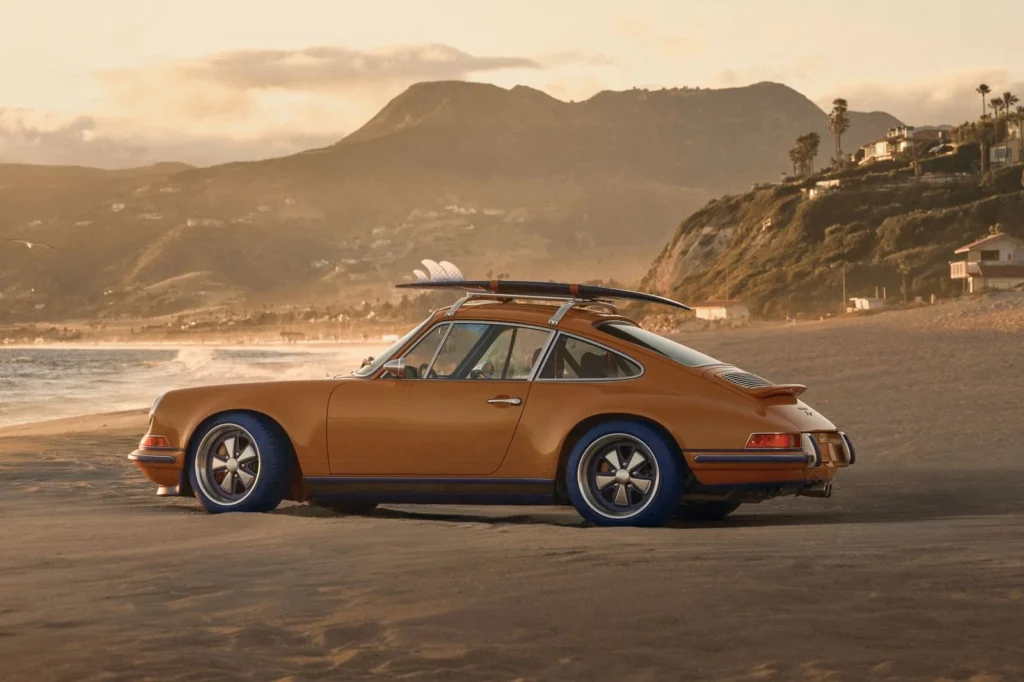
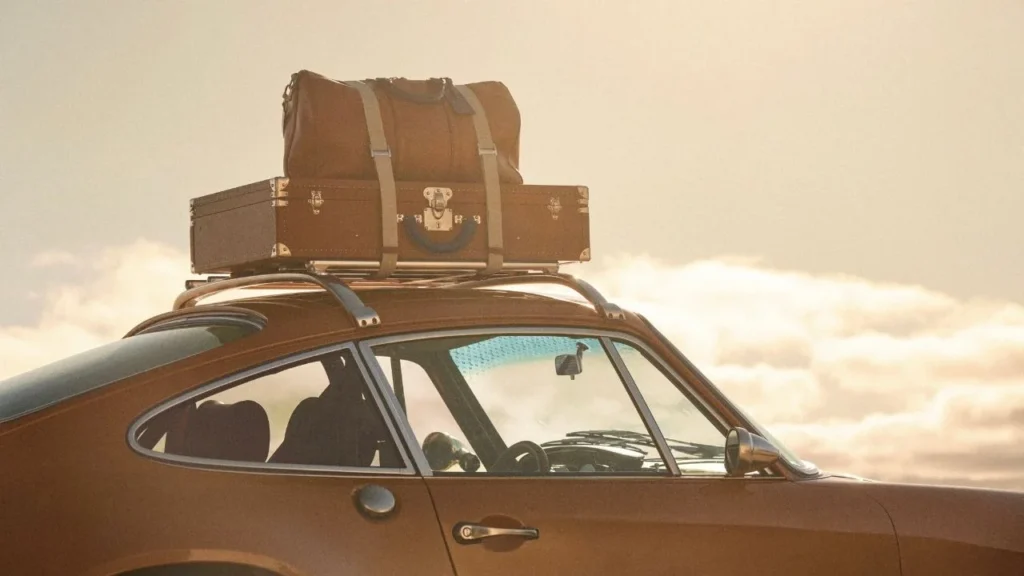
For the Classic, Louis Vuitton adopted a distinctive palette of saffron, cobalt blue and yellow. The combination draws from the House’s historic travel packaging and its tradition of automotive luggage, while cobalt-colored tires and contrasting yellow stitching extend the visual language across the exterior and cabin. A bespoke roof rack adds another layer of practicality, designed to accommodate everything from a trunk to a surfboard or a pair of skis.
Inside, natural leather creates a warm, understated atmosphere, while diamond-pattern embossing pays homage to the distinctive treatments associated with Louis Vuitton trunks. Singer’s leather specialists worked closely with Louis Vuitton artisans to select and develop the materials. Conventional plastic elements were replaced with finely finished metal across the cabin, including switches, locks, pull-tabs and air vents. Rhodium plating, anodising, electroplating, polishing and satin finishing were employed to give these functional components the character of jewelry.
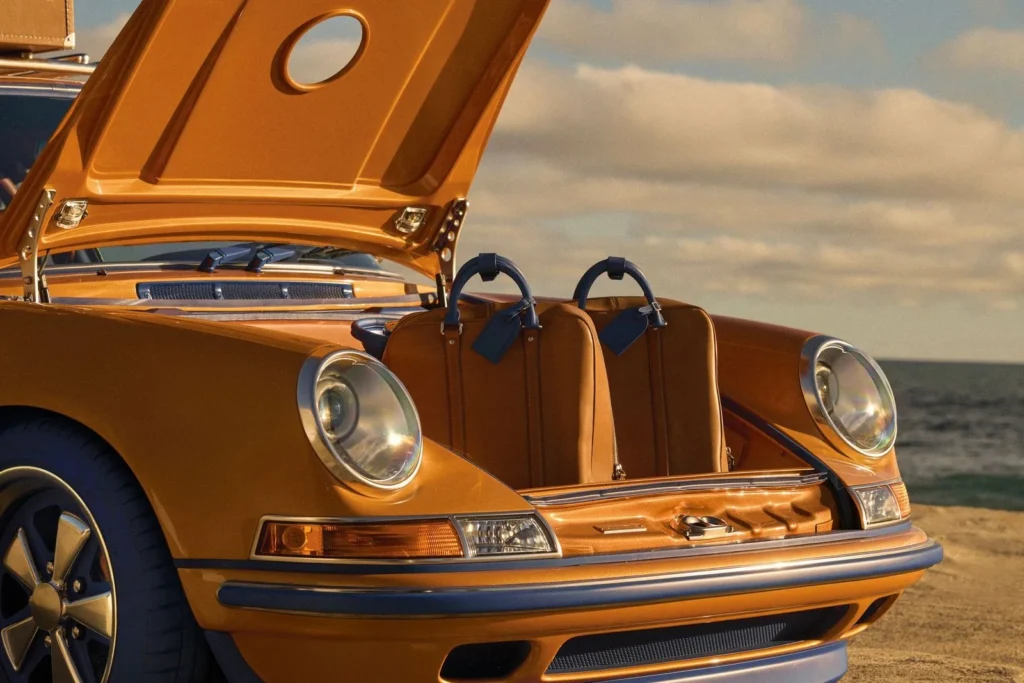
The Classic is accompanied by an entire Louis Vuitton travel wardrobe and equipment collection. The capsule brings together a naturally grained leather racing jacket, cotton-and-silk denim, LV Rally driving shoes, LV Remix Derby shoes, driving gloves and a carbon-and-glass-fiber helmet. The luggage collection includes a helmet case, Bisten suitcase, Keepall and two specially shaped bags designed for the front trunk.
Even the equipment carried outside the vehicle becomes part of the design story. The roof rack can accommodate a Louis Vuitton surfboard crafted from blond oak and walnut marquetry, alongside skis constructed from wood, titanium and steel. Every element reinforces the idea that travel is not simply about reaching a destination, but about how one moves through the world.
The Classic Turbo: A Different Expression of the Journey
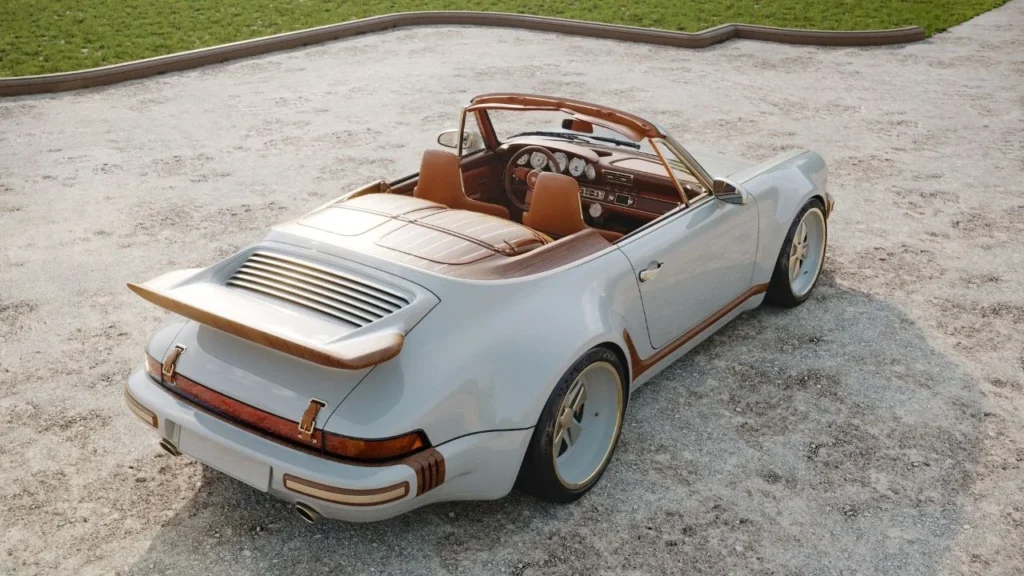
The second interpretation, the Porsche 911 Reimagined by Singer Classic Turbo, offers an entirely different aesthetic perspective. Developed from the vision of Nicolas Ghesquière, Louis Vuitton’s Artistic Director of Women’s Collections, the car embraces a more refined and architectural character. Calcaire Lutétien-inspired white bodywork is paired with brown accents, natural leather, golden details and extensive use of wood.
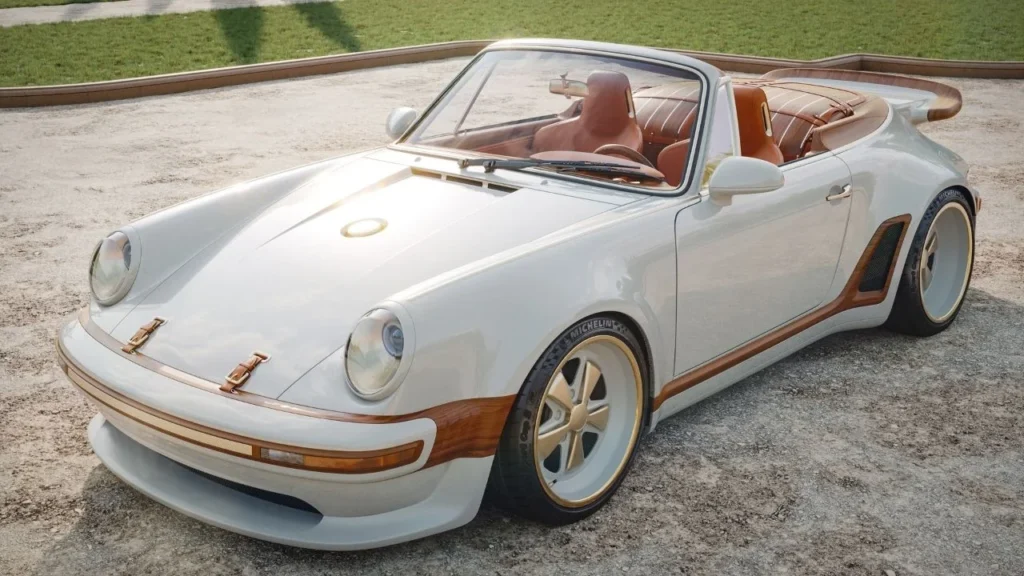
Ghesquière looked beyond traditional automotive references, drawing inspiration from the elegance of classic motorboats. That influence is particularly evident in the teak-inspired wooden deck positioned behind the rear-opening luggage compartment, creating an unexpected connection between grand touring by road and luxury travel on water.
At the heart of the dashboard sits another mechanical Louis Vuitton clock, this time framed by golden instruments and rich leather. Wood becomes a defining material throughout the vehicle, appearing across the bumpers, rear engine compartment, front luggage area and the storage compartment behind the seats. A three-piece trunk has been engineered specifically for the front boot, while leather straps subtly reference the construction language of Louis Vuitton trunks, motorsport equipment and traditional watch straps.
Ghesquière’s vision continues into a dedicated lifestyle capsule created for the cabriolet. The collection includes a Tambour Automatic watch crafted in ceramic and yellow gold, a made-to-measure parachute-silk suit, braided leather gloves, LV Sneakerina footwear, sunglasses and a carbon-and-glass-fiber helmet. The accompanying collection of bespoke travel pieces includes a garment bag, Alma, Express, Noé, Cruiser, Petite Malle and Keepall 45.
Where Craftsmanship Meets the Road
The significance of the collaboration extends beyond the two automobiles themselves. Founded in California in 2009, Singer Vehicle Design has built its reputation around reimagining classic Porsche 911s through meticulous restoration, engineering and personalization. Louis Vuitton brings an entirely different dimension to that philosophy, assembling expertise from its watchmaking, leather goods, fashion, footwear and trunk-making divisions into a single automotive project.
For Louis Vuitton, this is more than an exploration of the automobile. It is an extension of the House’s Art of Travel—a philosophy in which movement, craftsmanship and personal expression are inseparable.
Through Singer’s Porsche 911s, the road becomes another canvas for Louis Vuitton’s enduring language of luxury. The result is not simply two highly personalized sports cars, but two complete interpretations of modern grand touring—where mechanical performance, design, craftsmanship and the rituals of travel converge into a singular experience.
In these commissions, luxury is no longer confined to the destination. It becomes part of the journey itself.