
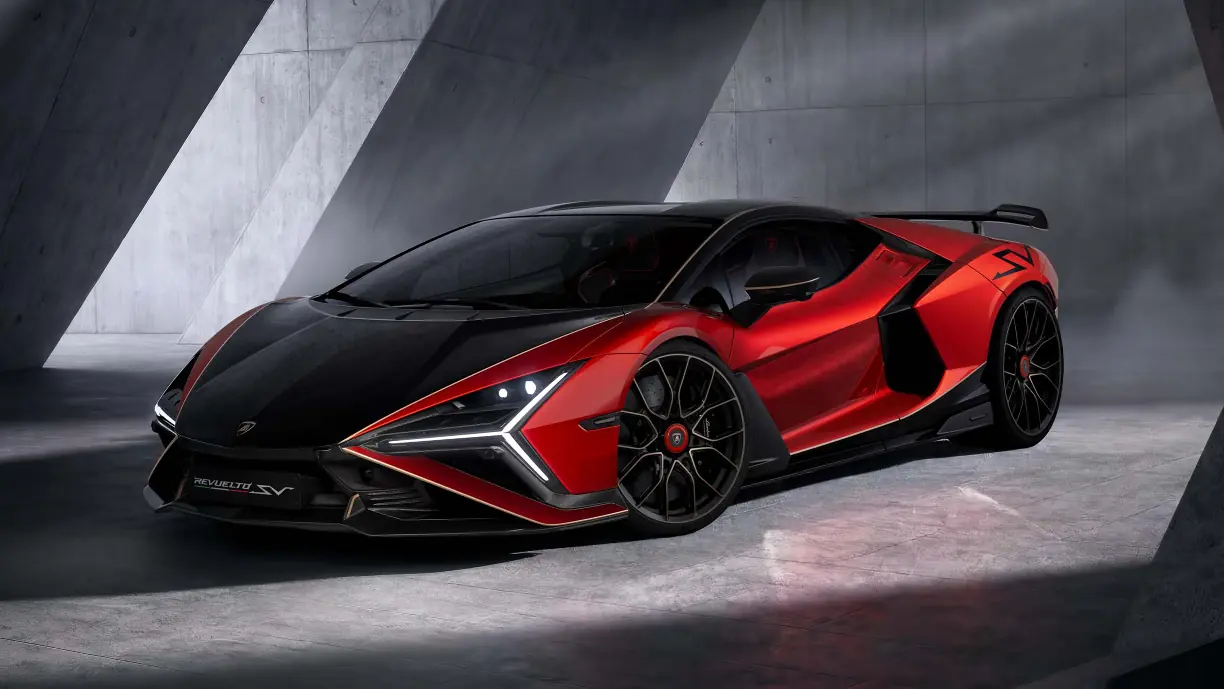
Lamborghini has taken the already formidable Revuelto and transformed it into something considerably more focused. The new Revuelto SV represents the most aggressive interpretation yet of the brand’s V12 hybrid flagship, limited to 1,963 examples as a tribute to Lamborghini’s founding year. Rather than simply adding power to an existing formula, Lamborghini has reworked the car’s aerodynamics, chassis, brakes and electronics with a clear objective: turn its most technologically complex supercar into a machine with a distinctly more visceral, track-oriented character.
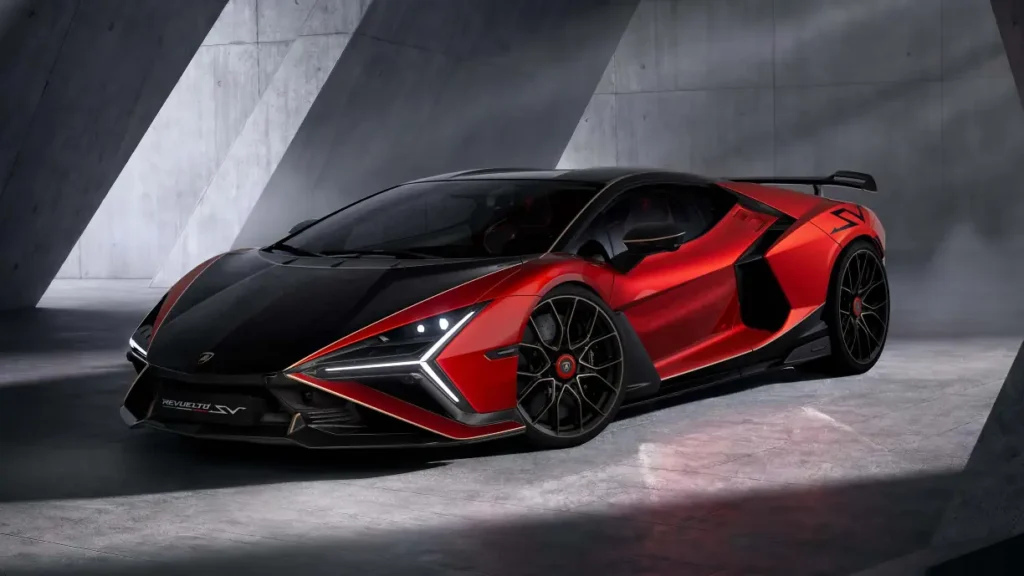
The V12 has always occupied a special place in Lamborghini’s identity. From the 350 GT and Miura to the Countach, Diablo, Murciélago and Aventador, the twelve-cylinder engine has defined the marque’s most celebrated eras. When the Revuelto arrived in 2023, it carried that lineage into electrification, pairing a naturally aspirated 6.5-liter V12 with three electric motors. The SV pushes that architecture further, introducing a larger 7.3-kWh battery capable of supplying considerably more electrical energy to the hybrid system.
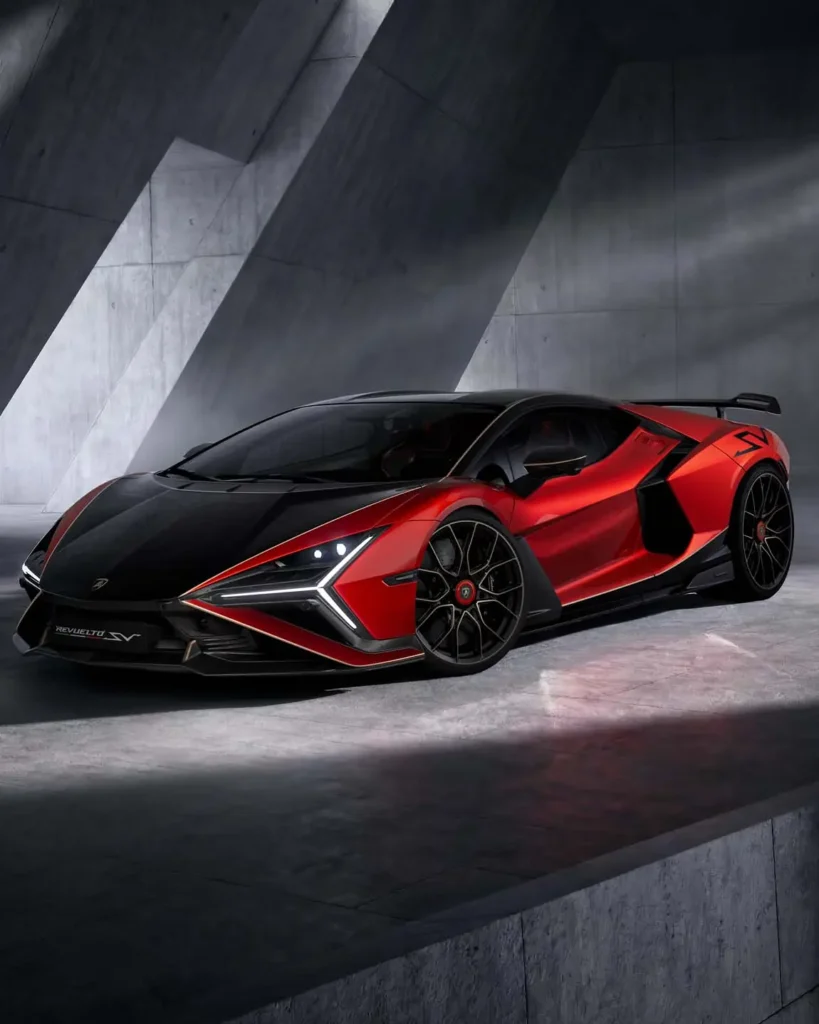
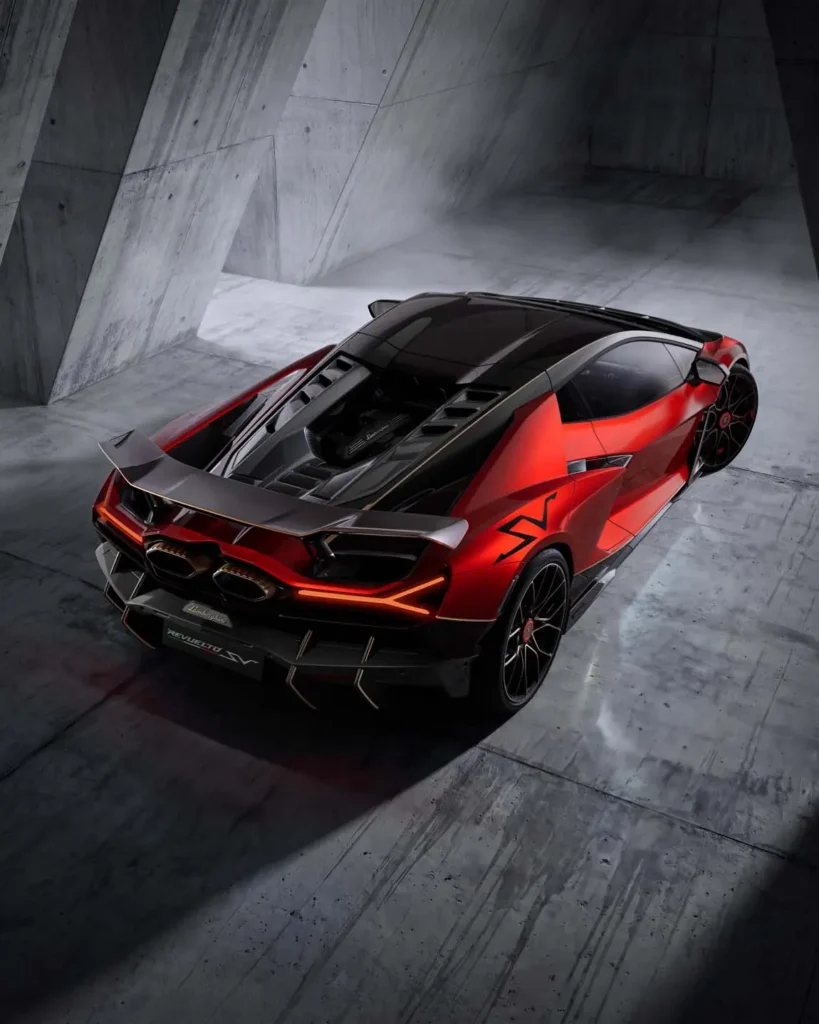
Electric assistance now contributes as much as 255 horsepower, lifting total system output to 1,050 hp. The V12 itself remains rated at 814 hp, reaching its peak at an extraordinary 9,250 rpm. Lamborghini quotes a 0–100 km/h sprint of just 2.4 seconds, 0–200 km/h in 6.7 seconds and a top speed exceeding 345 km/h. Yet outright acceleration is only part of the story. The SV has been engineered around a broader definition of performance, emphasizing cornering response, braking consistency and the ability to deploy its enormous power effectively lap after lap.
That philosophy is immediately visible in the bodywork. A fixed rear wing, redesigned front splitter, revised underbody aerodynamics and additional cooling openings dramatically alter the Revuelto’s aerodynamic profile. Lamborghini claims 80 percent more downforce than the standard car, while overall downforce efficiency rises by 60 percent. The aerodynamic balance has also shifted toward the front, helping sharpen turn-in while maintaining stability at speed. Improved brake cooling further supports the SV’s more demanding track ambitions.
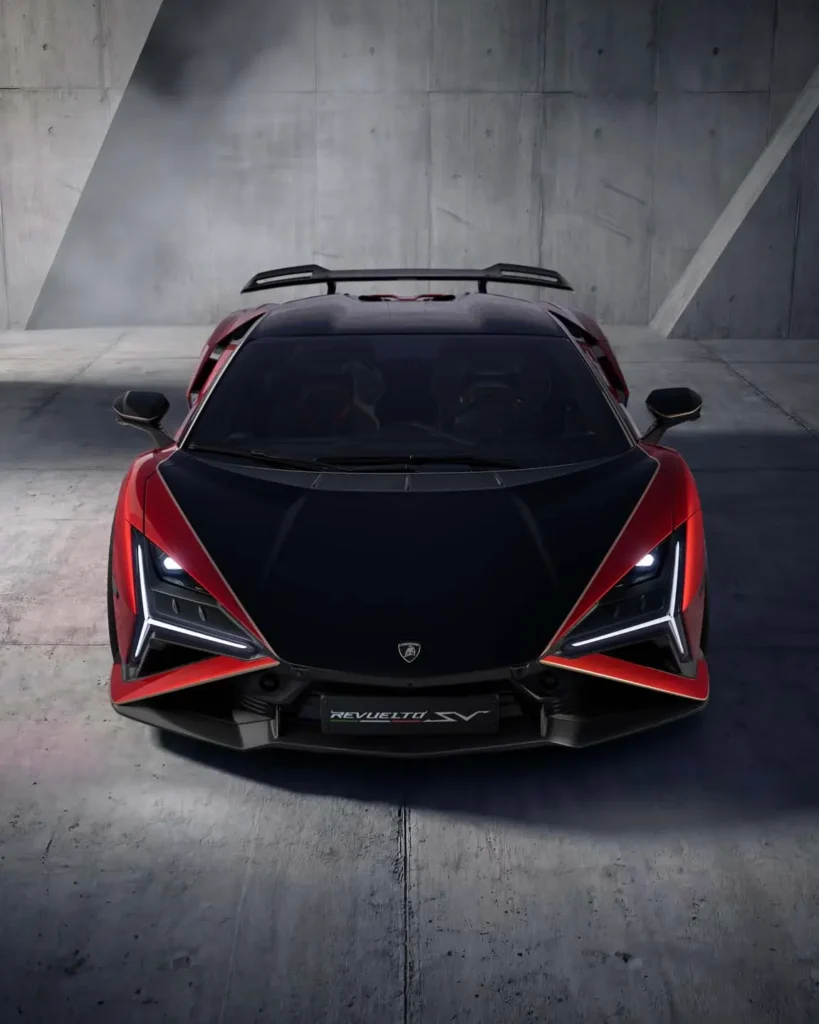
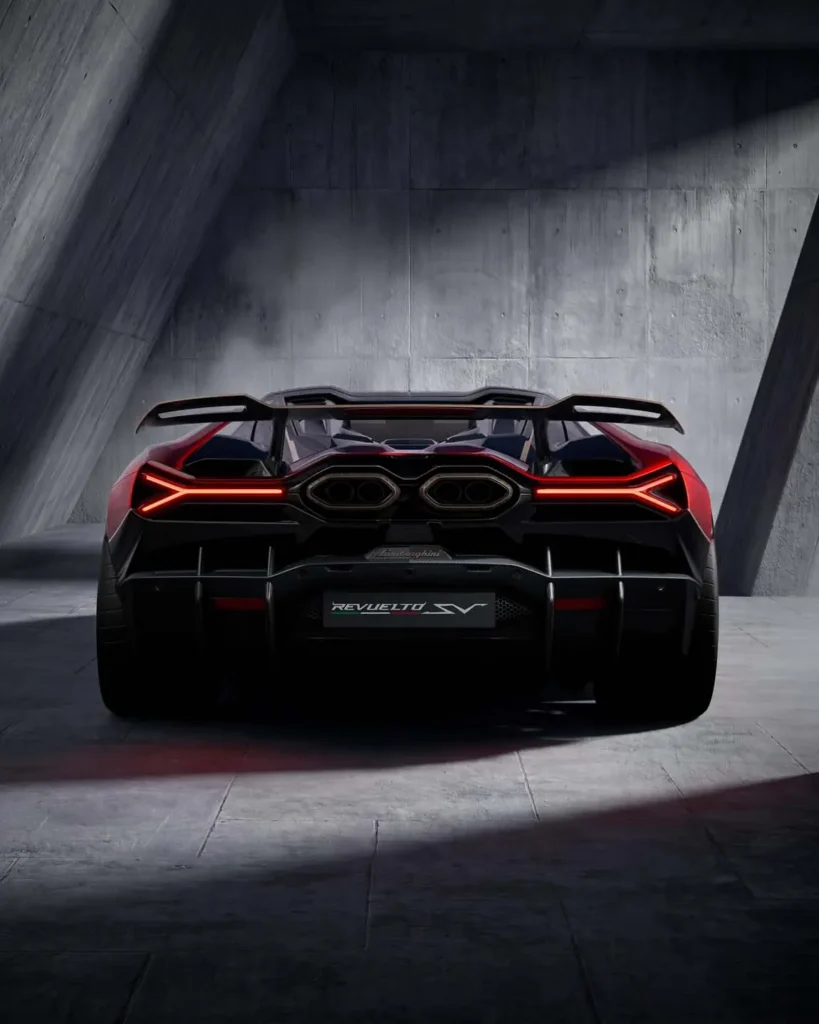
Underneath, Lamborghini has taken an unusually purist approach. The standard Revuelto’s electronically controlled MagneRide dampers make way for mechanically adjustable, four-way passive dampers influenced by GT3 racing technology. Instead of relying entirely on electronic modes, drivers can physically tailor the suspension to the conditions and circuit. It is a deliberate move toward greater driver involvement. Lamborghini says the revisions deliver a 17 percent improvement in agility and a 10 percent increase in lateral grip.
The hardware continues with road-legal Bridgestone Potenza Race R tires, lighter center-lock wheels measuring 20 inches at the front and 21 inches at the rear, and a new Pilota drive mode incorporating five-stage traction control. Together, these changes suggest that Lamborghini is less interested in creating another headline-grabbing horsepower figure than in making the Revuelto’s performance more accessible and repeatable when the road becomes a circuit.
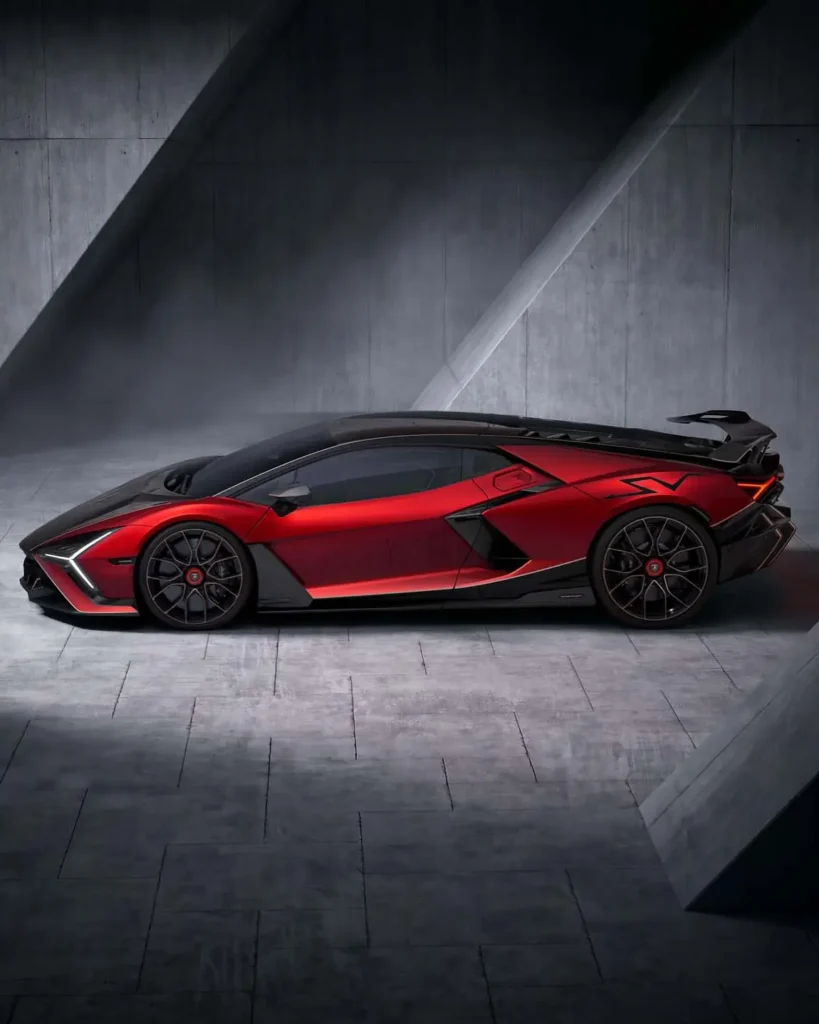

Stopping power receives an equally serious upgrade. The SV is fitted with larger CCM-R Plus carbon-ceramic brakes, measuring 420 mm up front and 410 mm at the rear. Lamborghini claims a 200–0 km/h stopping distance of 110 meters, along with an 11 percent increase in peak deceleration and substantially improved thermal management. Disc temperatures are reduced by 12 percent, while heat dissipation improves by 23 percent.
A sophisticated six-dimensional sensor positioned close to the vehicle’s center of gravity monitors longitudinal, lateral and vertical movement, together with pitch, roll and yaw. The information allows the car’s control systems to respond more intelligently to changes in braking, stability and torque distribution, bringing electronic intervention closer to the moment it is actually needed.
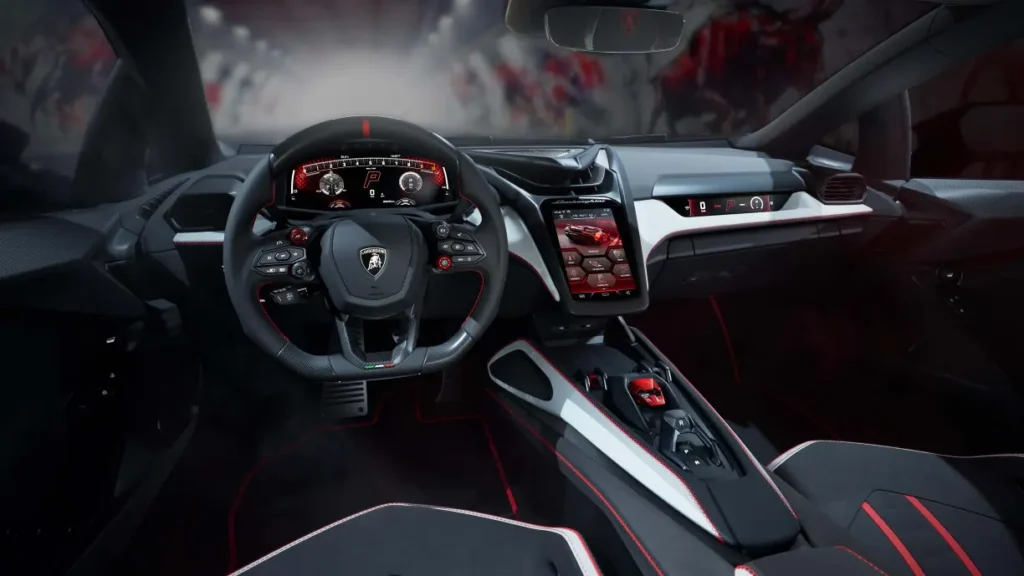
Perhaps most remarkable is that all of this additional capability arrives without an increase in quoted dry weight. Lamborghini lists the Revuelto SV at the same 1,772 kg as the standard model. Carbon-fiber door panels, lightweight racing seats and lighter wheels help offset the added battery capacity, aerodynamic components and braking hardware. The resulting power-to-weight ratio improves to 1.66 kg per PS, down from 1.75 kg per PS. At Hockenheim, the package has reportedly produced a 1:41.6 lap time.

The numbers do not make the Revuelto SV the undisputed winner of every performance category. Ferrari’s 849 Testarossa, for example, is also rated at 1,050 PS while weighing considerably less, and machines such as the Ferrari F80 and McLaren W1 occupy an even more extreme hypercar category. But Lamborghini’s proposition is different.
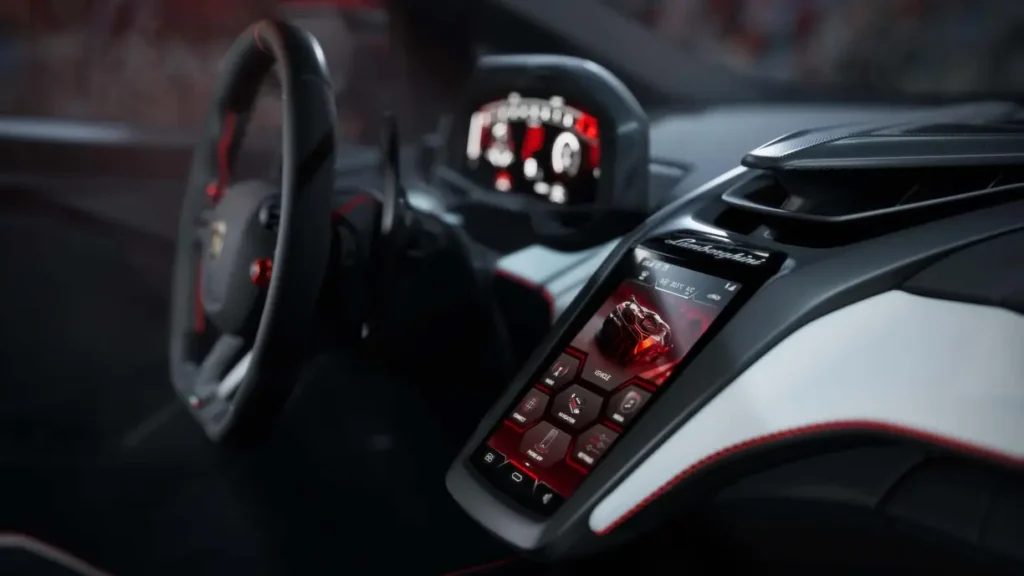
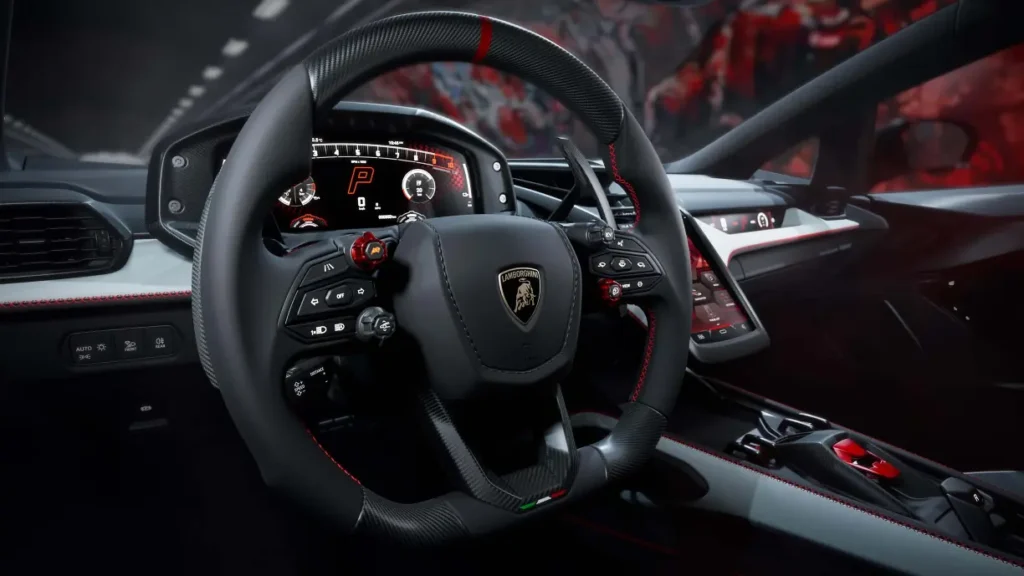
Few cars combine a naturally aspirated V12 capable of spinning to 9,500 rpm with three electric motors, electric all-wheel drive, sophisticated torque vectoring and a chassis deliberately engineered around driver feedback. That combination is precisely what makes the Revuelto SV distinctive.
The original Revuelto proved that Lamborghini could electrify its legendary V12 without stripping away the drama that made the engine so important to the brand. The SV takes the next step, asking whether electrification can actually make a heavyweight hybrid supercar feel more uncompromising rather than less.
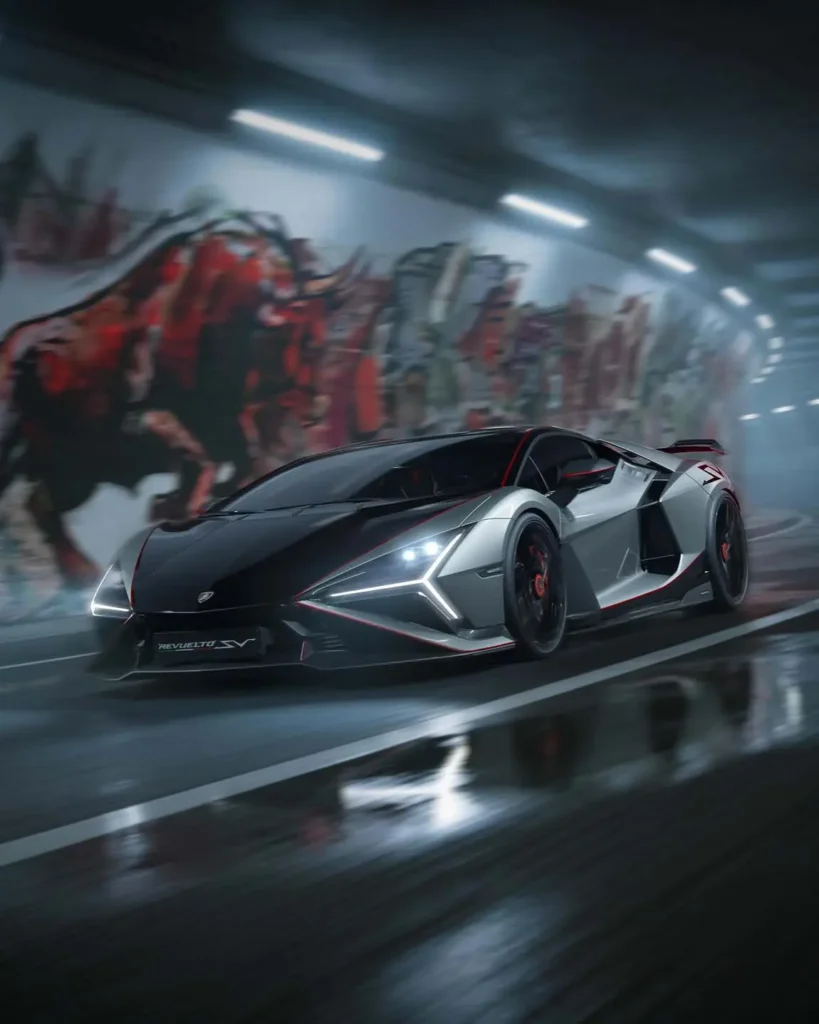
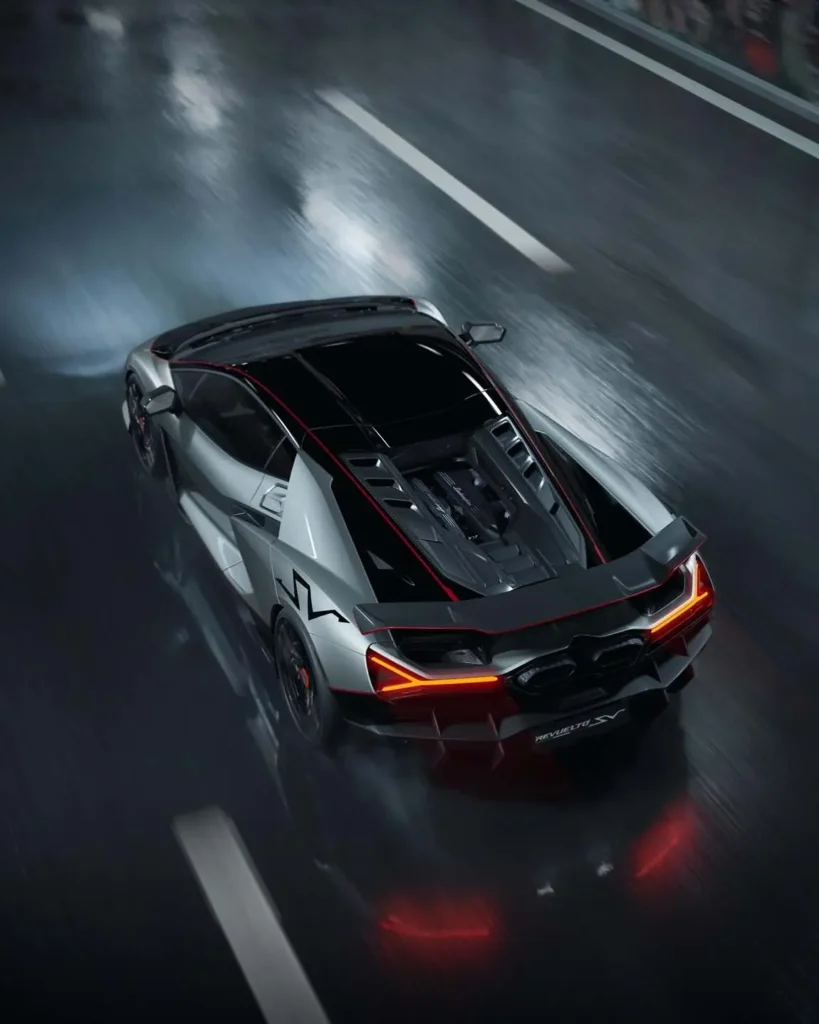
Judging by the engineering beneath its dramatic silhouette, Lamborghini’s answer appears to be yes. The Revuelto SV is not merely a faster Revuelto. It is a more aerodynamic, more adjustable and more disciplined machine, designed to extract greater performance from every component. If the Revuelto introduced Lamborghini’s V12 to a new hybrid era, the SV is the car that reminds us the future of the twelve-cylinder supercar can still be gloriously intense.