
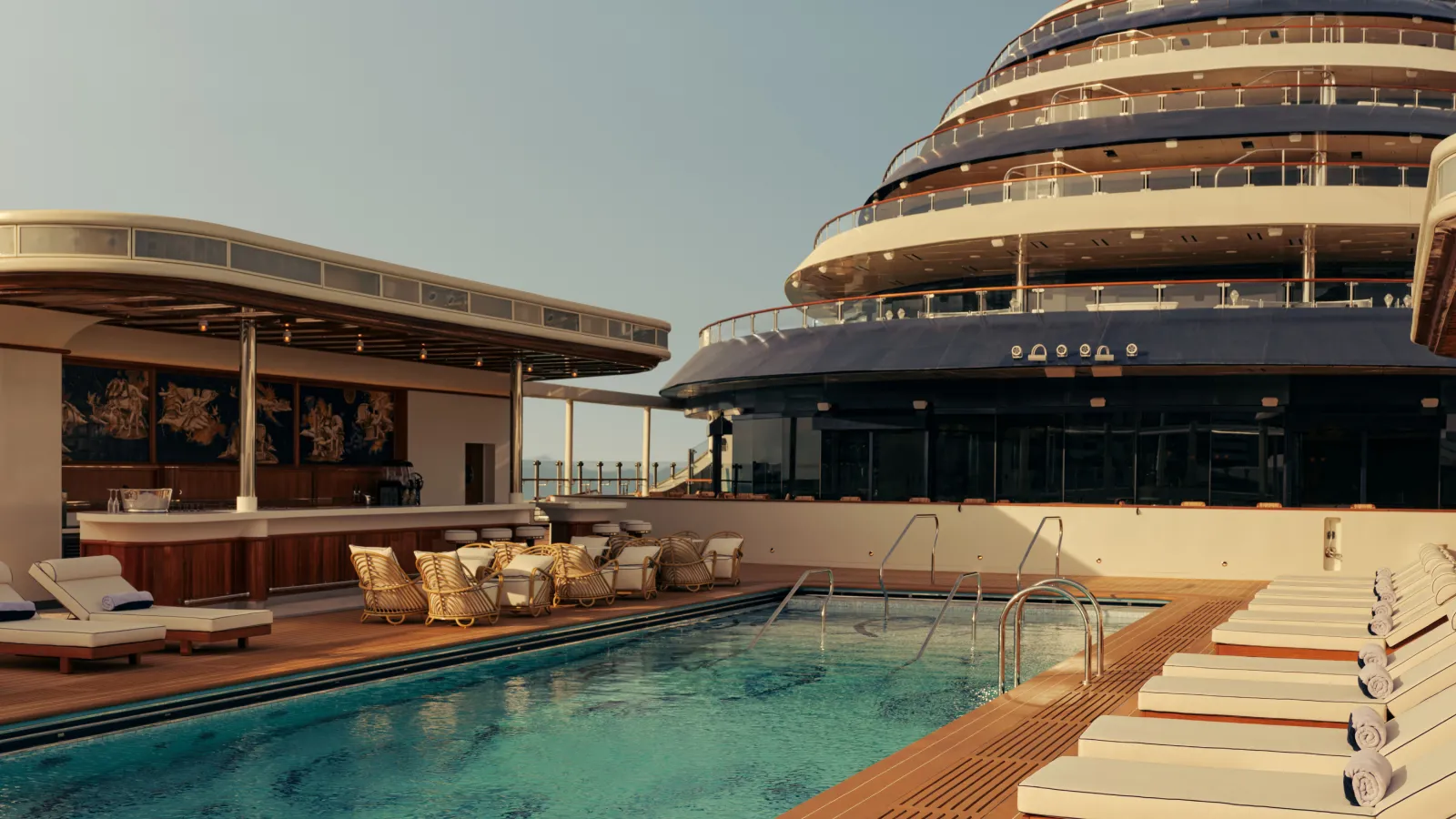

The luxury hotel industry is no longer confined to land. Increasingly, the world’s most prestigious hospitality names are taking their signature approach to service, design and exclusivity onto the water, transforming the yacht into the next frontier of five-star travel. Ritz-Carlton has already established a three-yacht presence, Orient Express has entered the scene with its 220-metre Corinthian, and Aman is preparing its own arrival in 2027. Now Four Seasons has joined this increasingly competitive ocean-going club with Four Seasons I, a 207-metre yacht conceived not simply as a vessel, but as a floating extension of the brand’s philosophy.
Introduced in March as Four Seasons celebrated its 65th anniversary, the yacht represents a significant expansion of the company’s luxury ecosystem beyond its renowned hotels and private aviation offerings. At 34,000 gross tonnes a measurement of enclosed volume rather than weight the ship stretches across 15 decks while accommodating only 95 suites. Every accommodation is positioned toward the sea, eliminating the enclosed interior cabins commonly associated with larger cruise ships. A near one-to-one ratio of guests to staff reinforces the sense that this is a private yacht experience delivered on a much larger canvas.
The Mediterranean and Caribbean form the natural stage for Four Seasons I, with itineraries designed around discovery rather than simply moving from one port to another. A voyage from Valletta to Monte Carlo, for example, can move from Malta’s historic fortifications to the Aeolian Islands, Ischia, the Argentario coast and the French Riviera, weaving together gastronomy, culture, nature, adventure and wellness along the way.
The experiences ashore are carefully curated to complement the atmosphere on board. In Malta, guests can explore Valletta’s military heritage, wander through the historic streets of Birgu or venture into the countryside for a visit to the Ta’ Betta wine estate. On Lipari, the journey can turn toward archaeology, local Aeolian cuisine and wine tastings at Tenuta di Castellaro. Ischia offers a slower rhythm, from the village of Sant’Angelo to the gardens of Giardino del Nonno. Further north, Porto Ercole opens the door to Maremman vineyards, Michelin-starred dining and even helicopter excursions into Rome. Along the French Riviera, the itinerary becomes increasingly cinematic, with heritage visits to Le Castellet, lunch overlooking Èze and a private exploration of Villa Ephrussi de Rothschild before the yacht reaches Monte Carlo.
Yet some of the most memorable experiences require no shore excursion at all. At selected anchorages, Four Seasons I transforms its side-opening marina into an extraordinary platform at sea. The yacht’s transverse marina unfolds from both sides of the hull, creating direct access to the water for swimming, tenders and watersports. Rather than feeling like a conventional cruise ship swimming area, it becomes a private seaside terrace suspended directly above the Mediterranean.
The design philosophy is equally ambitious. Tillberg Design of Sweden guided the project from its earliest conceptual stages, developing the yacht’s overall architecture, spatial planning, suites and major guest environments around an aesthetic described as a meeting point between classic glamour and cinematic modernity. Finnish naval engineering firm Foreship helped establish the technical foundation, while Fincantieri brought the concept into physical form. Martin Brudnizki Design Studio was responsible for many of the principal restaurants, bars and social spaces, with Prosper Assouline providing creative direction across the project.
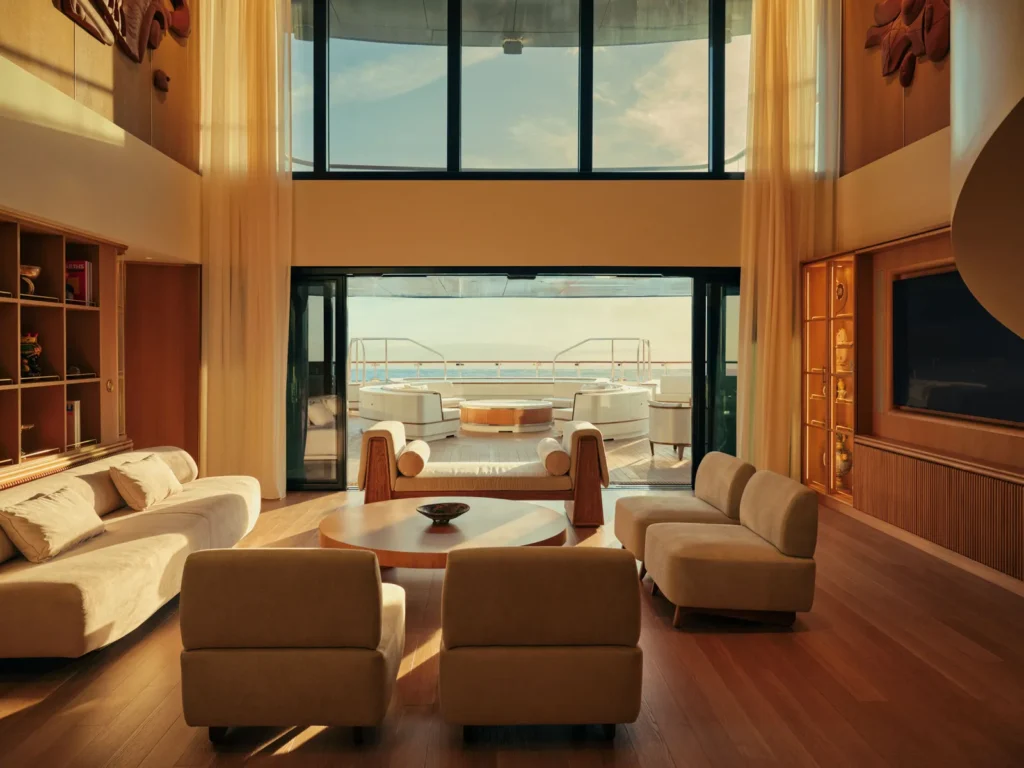
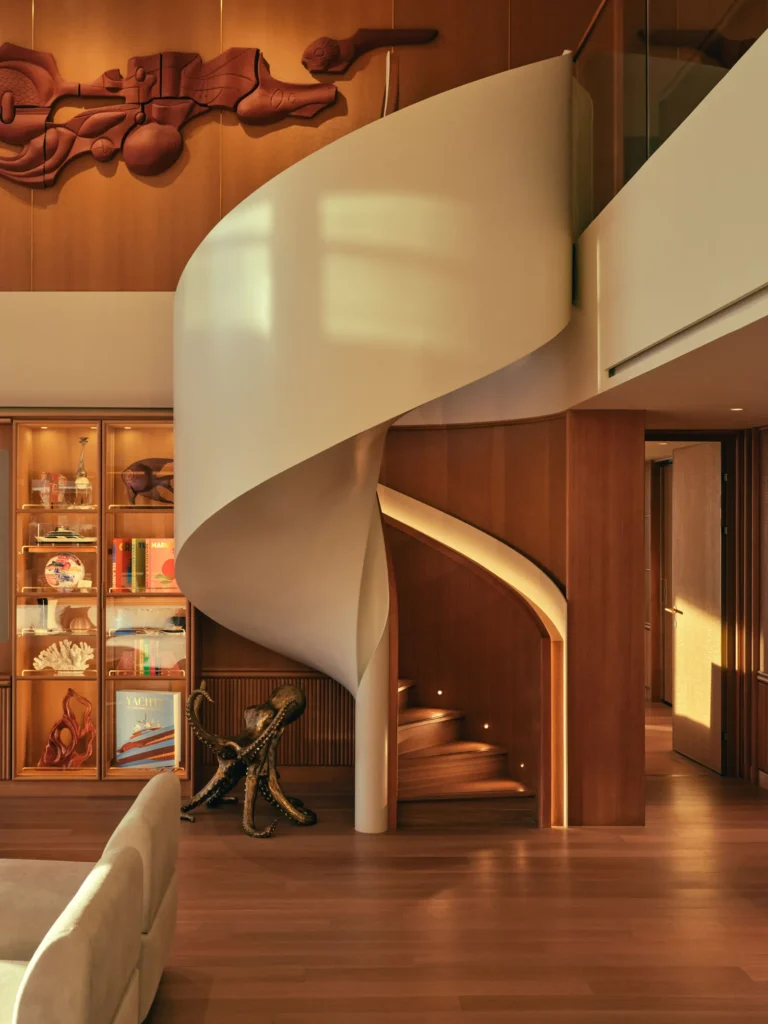
One of the yacht’s most important architectural decisions is almost invisible. Rather than relying on conventional structural supports around the outer perimeter, the principal load-bearing elements were moved inward, freeing the exterior walls for expansive glazing. The result is an extraordinary amount of glass, allowing daylight to penetrate deep into the interiors while keeping the horizon constantly present. Suites are oriented toward the sea, and the boundary between inside and outside is intentionally softened. Even the changing view becomes part of the architecture, providing a continuous visual connection to the destination beyond the hull.
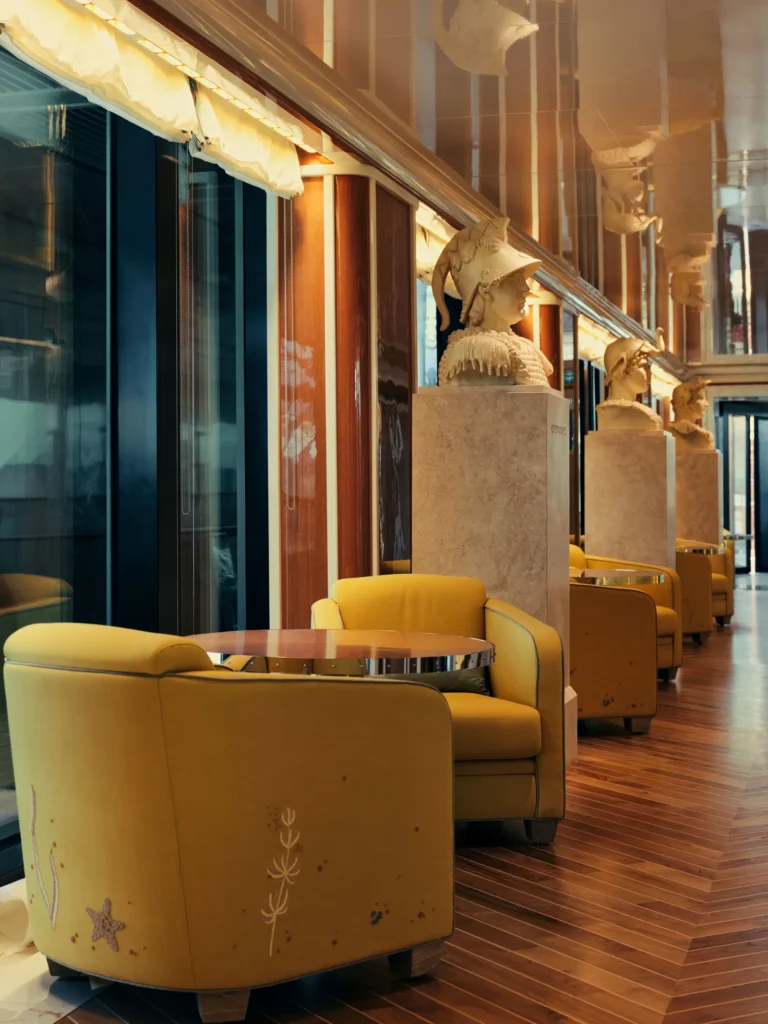
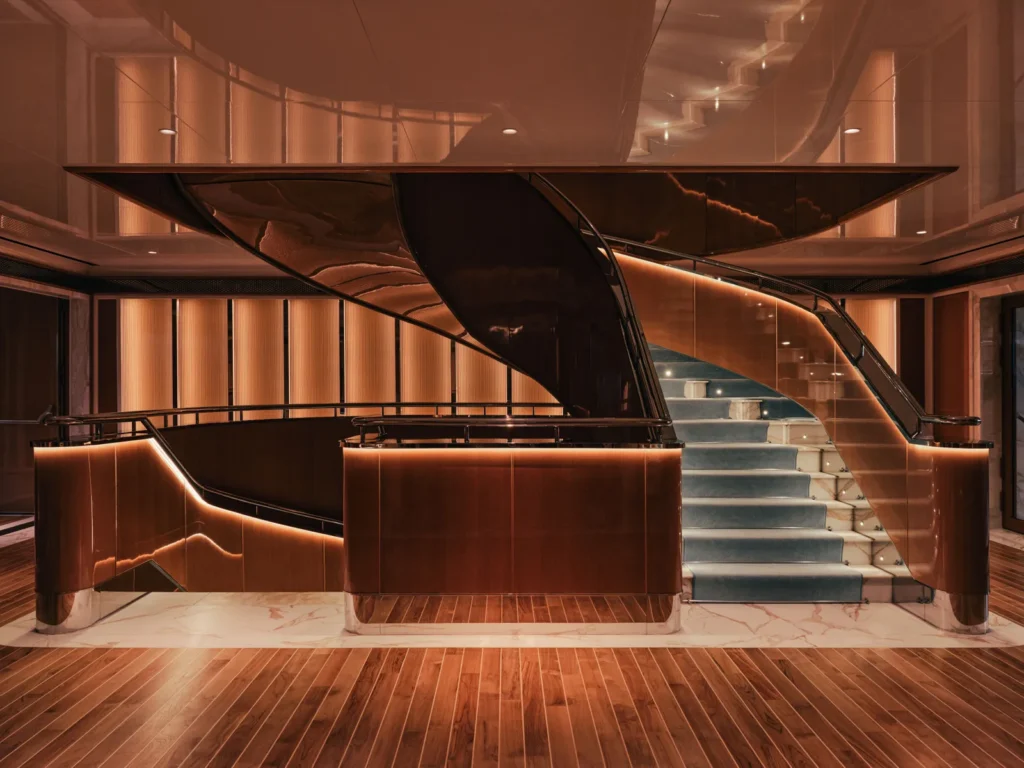
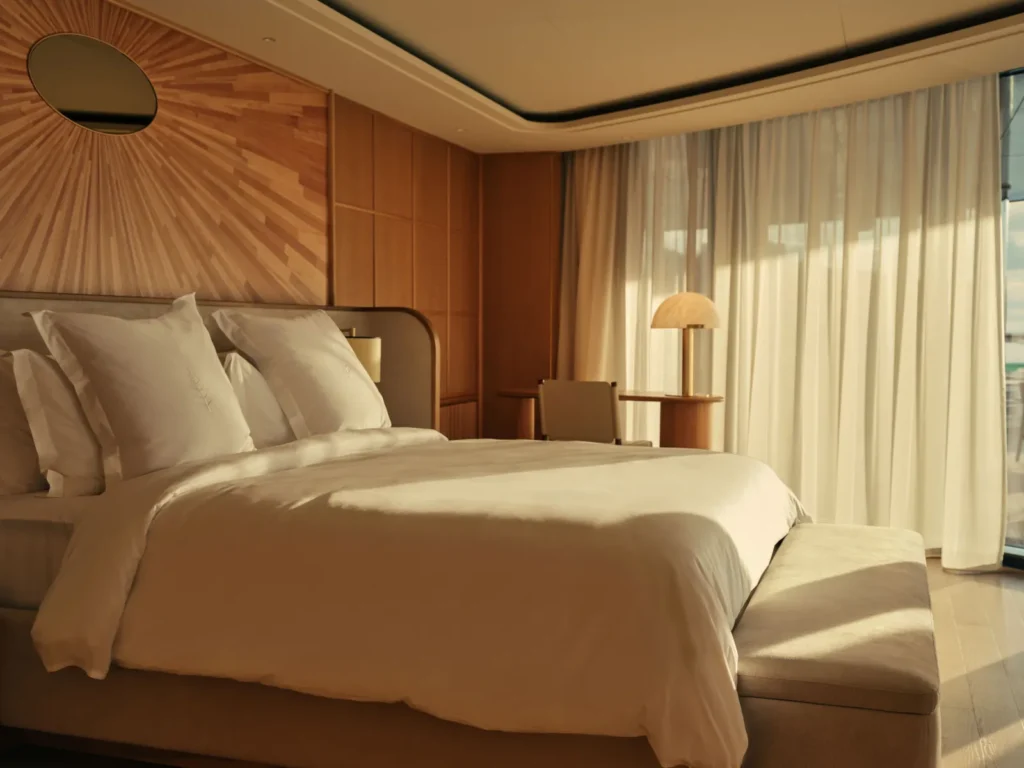
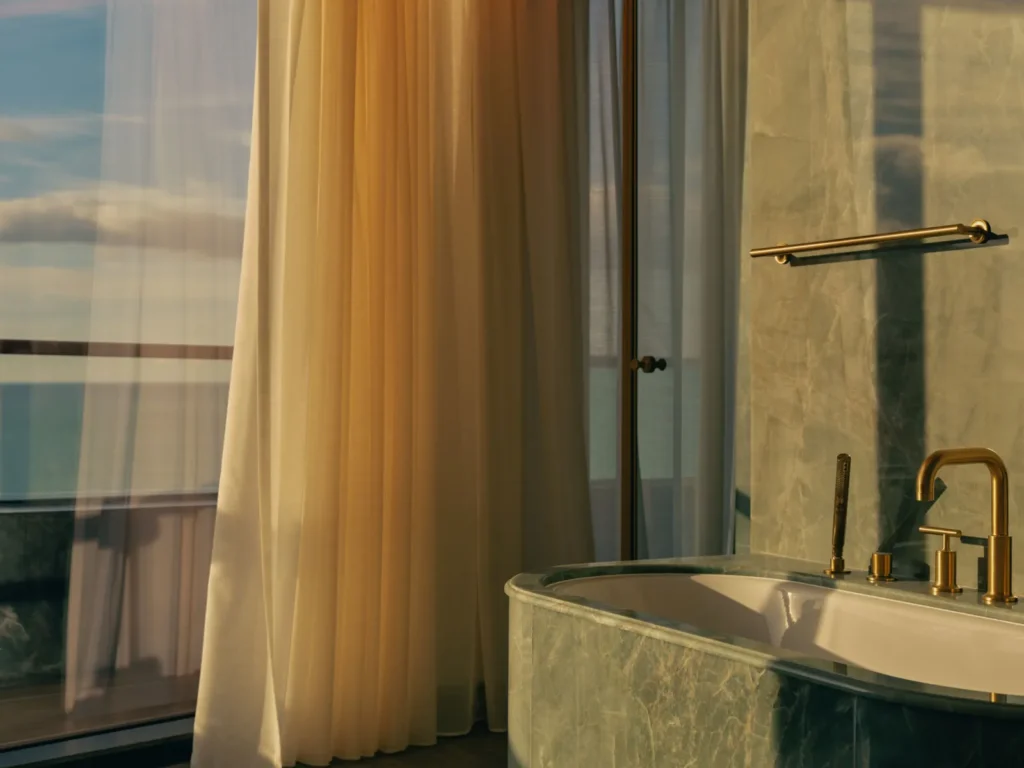
The interiors avoid the predictable visual language of a cruise ship. Warm timber, textured carpeting, richly veined stone, glass and polished metal create the atmosphere of an exceptionally refined private residence. In the suites, anigré-toned wall panels with an Astrakhan finish are paired with parquet flooring, custom rugs and aqua-toned surfaces inspired by Brazilian quartzite. In certain areas, sophisticated porcelain stoneware replaces rare natural stone, allowing the designers to retain the depth and character of the materials while meeting the demanding fire, ultraviolet and maintenance requirements of a working yacht.
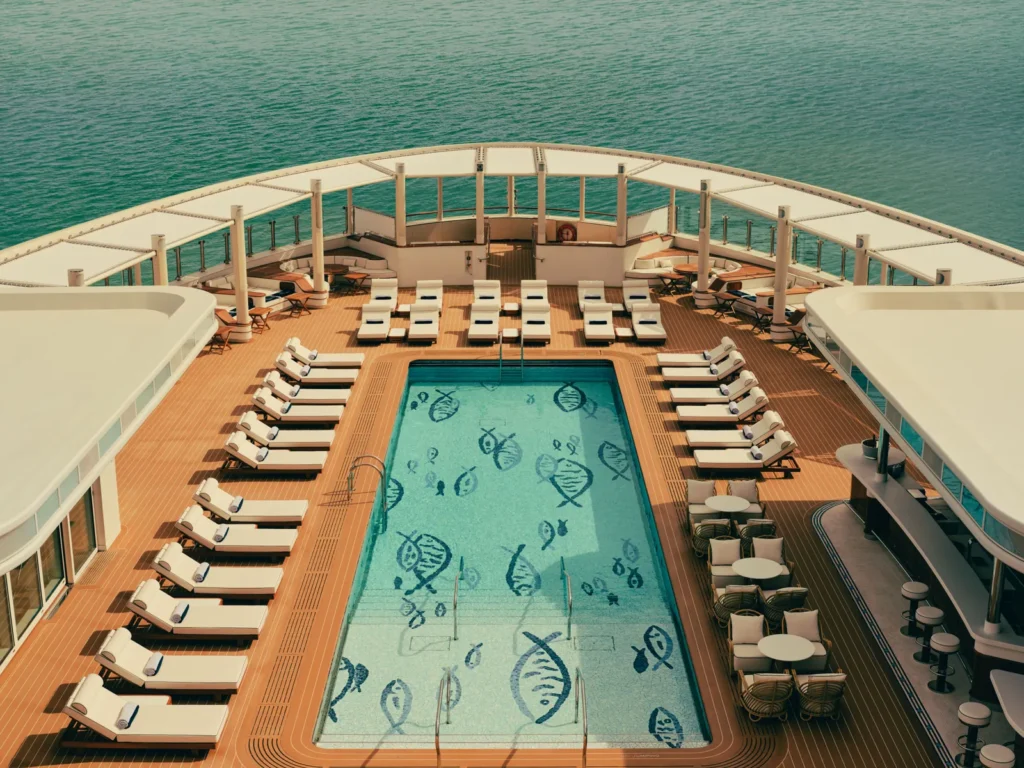
Craftsmanship is woven into the architecture rather than added as decoration. Clifford Glass Studio created églomisé panels based on historic nautical charts, while British artist Katherine Lloyd produced the shell artwork for Champagne & Caviar. The main pool features a custom fish mosaic inspired by Georges Braque’s Les Poissons. Throughout the yacht, the design team draws from maritime history without turning the vessel into a theatrical recreation of the past. The references are subtle, tactile and often discovered only after closer inspection.
Lighting reinforces that philosophy. MRD Lighting created an environment that changes naturally with the day, allowing sunlight to dominate the interiors during daylight hours before gradually shifting toward a warmer, more intimate atmosphere after sunset. Even the smallest spaces receive the same attention to detail, including a public washroom featuring a marine fossil that is centuries old. History is present throughout Four Seasons I, but never overwhelms the contemporary character of the yacht.
For those seeking the ultimate accommodation, the Funnel Suite represents the project at its most extravagant. Spread across four levels and approximately 9,975 square feet, the three-bedroom residence is wrapped in sweeping curved glass and includes its own private pool, outdoor gym, kitchen, entertaining areas and internal lift. Its enormous expanse of glazing is presented by Four Seasons as the largest contiguous piece of glass at sea, creating an extraordinary sense of openness for a residence surrounded by ocean.
The Funnel Suite also captures the design philosophy found throughout the yacht: traditional nautical elegance interpreted through modern engineering and contemporary residential design. The same principles extend across the remaining accommodations. Beds face the ocean, full-height windows bring the horizon into the room and private terraces provide an immediate connection with the outdoors. Custom marquetry, carefully coordinated flooring and discreet transitions between spaces give the suites a feeling of permanence rather than temporary hotel accommodation. Bathrooms continue the residential approach with generous double vanities, walk-in showers and deep soaking tubs surrounded by aqua-green quartzite and stone-inspired surfaces.
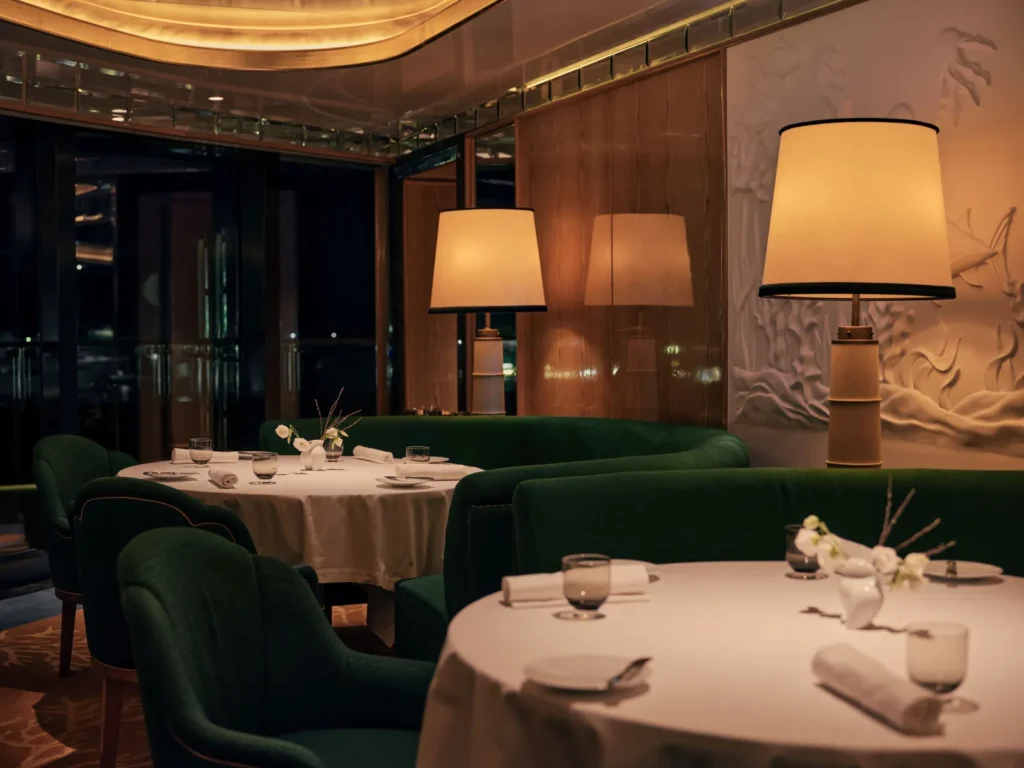
The culinary program is equally substantial. With 11 restaurants, bars and lounges spread throughout the yacht, Four Seasons I offers enough variety to make dining a central part of the journey rather than a routine necessity. Sedna is the gastronomic centerpiece, occupying an enveloping emerald-hued dining room dedicated to contemporary French cuisine. A rotating chef-in-residence program brings some of the world’s leading culinary talent onboard, including Christian Le Squer of Le Cinq in Paris, Luca Piscazzi of Pelagos in Athens and Guillaume Galliot of Caprice in Hong Kong.
Miuna takes a very different direction. Centered around an intimate 16-seat counter crafted from hinoki wood, the restaurant presents a Mediterranean interpretation of Japanese omakase under executive chef Yusuke Yamamoto. The menu follows the yacht’s route, incorporating ingredients sourced from the surrounding waters and destinations. Expect dishes such as sea bass usuzukuri with lemon ponzu, Mediterranean sea bream with asparagus and pickled radish, as well as an assortment of premium nigiri and sashimi.
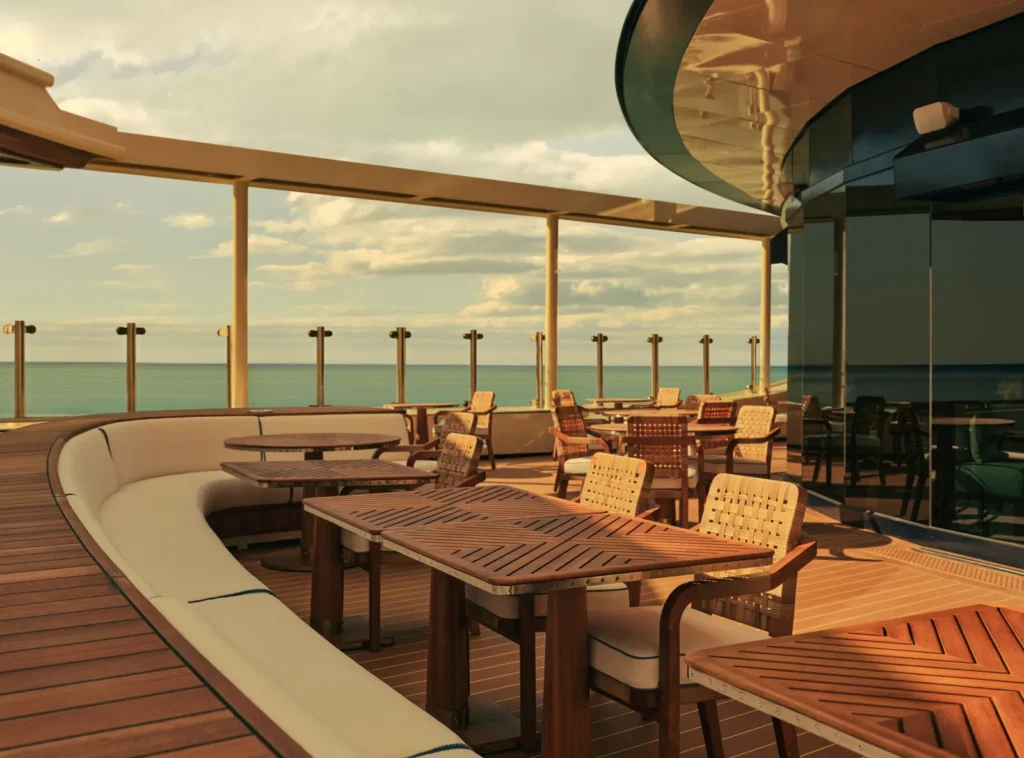
For a more relaxed expression of Mediterranean dining, Terrasse serves as the yacht’s everyday gathering place, moving effortlessly from breakfast to crudos, wood-fired pizza, handmade pasta and freshly selected fish. At Pistachio, the emphasis shifts toward coffee, pastries, viennoiserie and beautifully finished petits gâteaux, while the Salon provides a more leisurely setting for breakfast and afternoon tea.
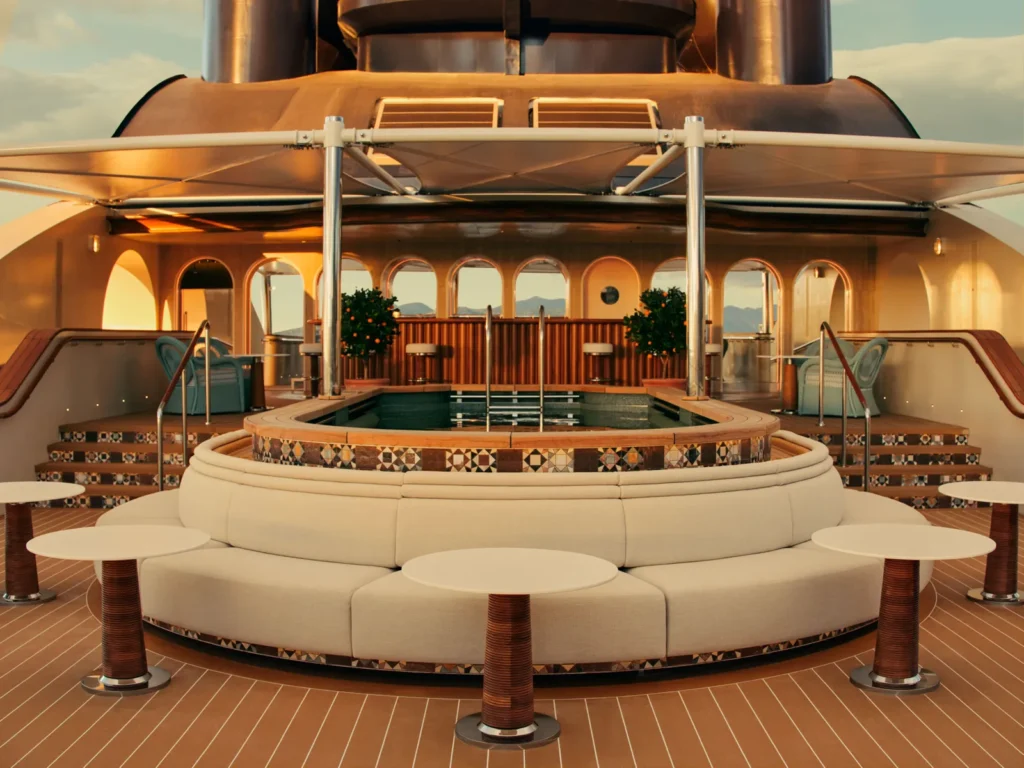
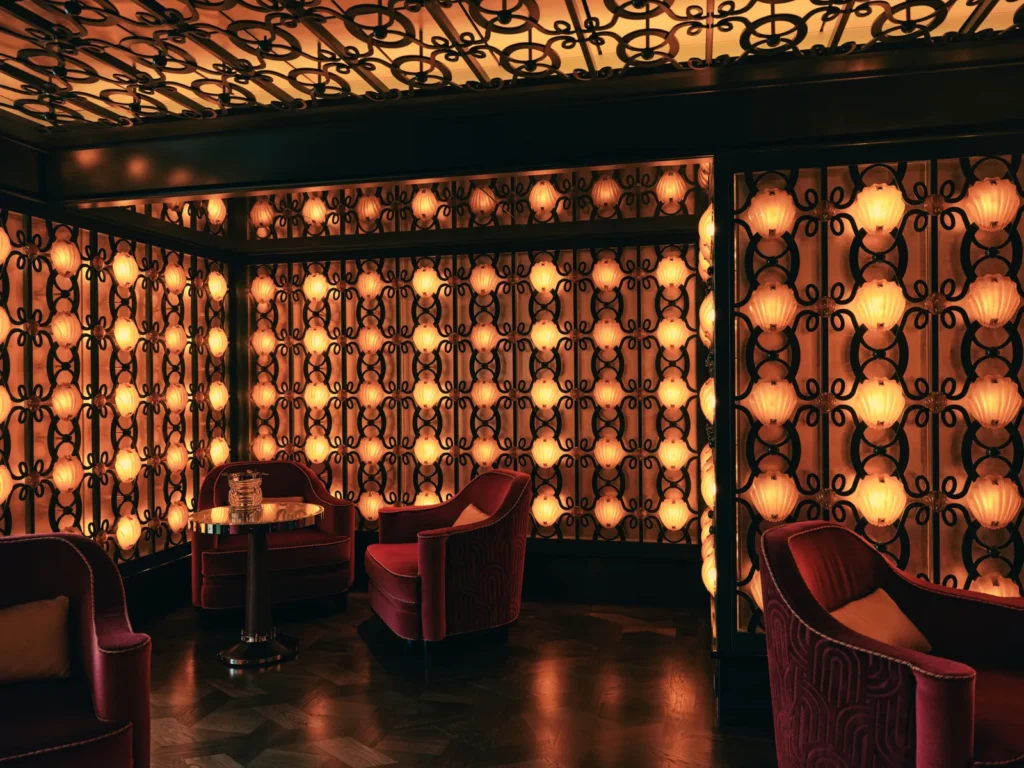
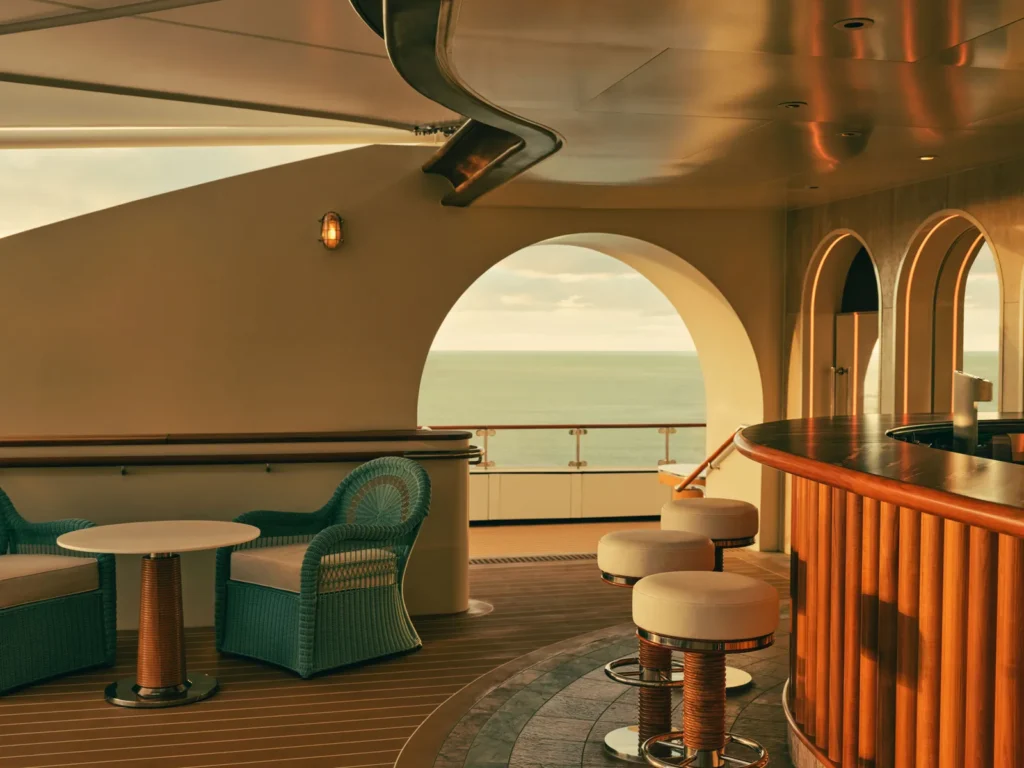
Higher on the yacht, Horizon Lounge combines Levantine-inspired cuisine with a relaxed beach-club atmosphere and plunge pool. As the sun begins to fall, Champagne & Caviar becomes one of the most atmospheric places onboard, occupying an adults-only terrace overlooking the pool and framed by Katherine Lloyd’s shimmering shell installation. Later in the evening, Bar O introduces a more theatrical mood inspired by the glamour of 1960s European jet-set culture, with vintage spirits, tableside cocktail preparation and handcrafted églomisé tables produced in London.
Despite the range of personalities across the dining venues, the interiors remain connected through a consistent vocabulary of timber, deep greens, stone, glass and finely crafted surfaces. Each restaurant has its own identity, but none feels disconnected from the larger story of the yacht.
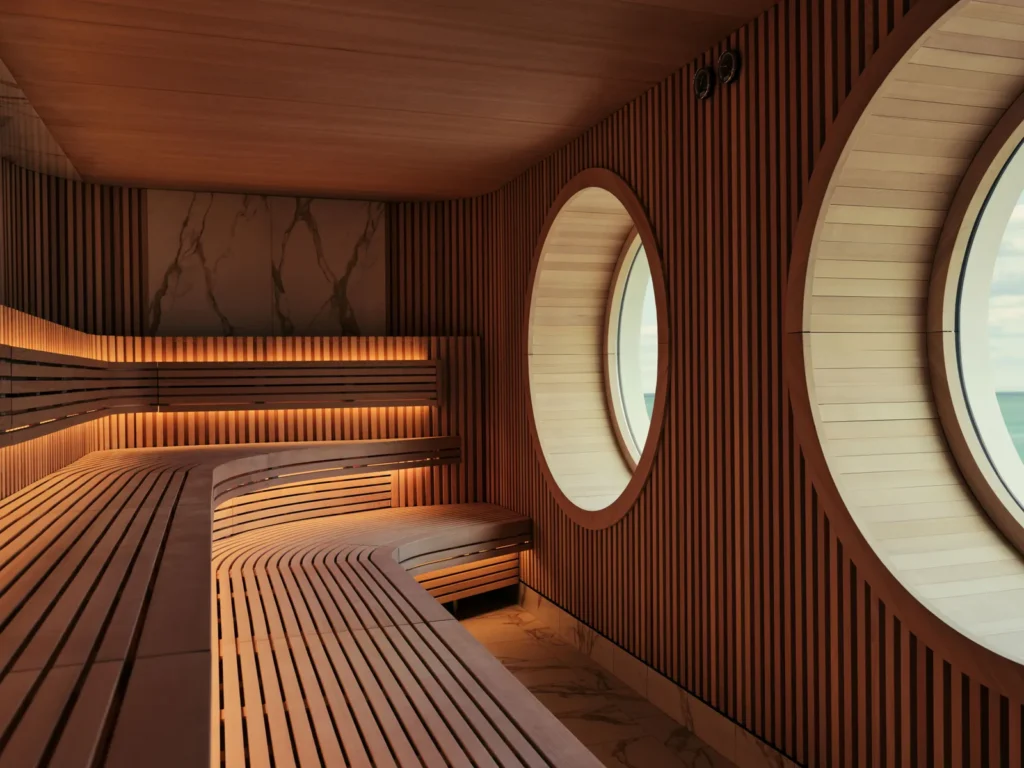
Wellness receives equal consideration. L’Oceana Spa occupies Deck Four and introduces a quieter, more tactile atmosphere through natural stone and intricate mosaics created by Morandi Studio. Some of the individual mosaic installations required roughly 100 hours of craftsmanship. At the centre of the thermal experience is a mixed-gender hammam accommodating up to 12 guests, supported by an ocean-facing Finnish sauna, infrared sauna, aromatic steam room, cold plunge, cryotherapy chamber and spa pool.
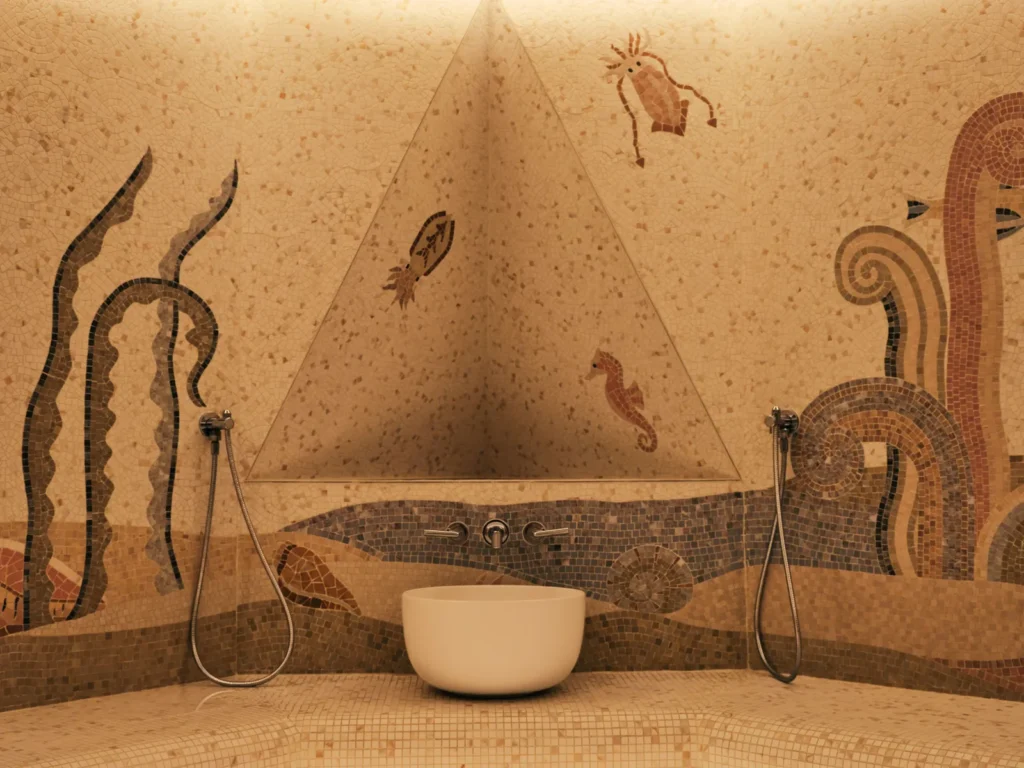
Treatment programs incorporate products from Margy’s Monte Carlo, La Mer and Azorean biotechnology brand Ignae. Among the signature experiences is the Four Seasons Miracle Broth Facial, which combines La Mer formulations with cryotherapy, sound and pressure-point techniques. Ignae’s Azorean Rebirth Body Ritual takes a more elemental approach, incorporating sea salt, botanical oils and spirulina before moving into an extended body and scalp massage.
The fitness facilities continue the same connection with the ocean. Technogym equipment, Frame reformers and advanced body-assessment technology occupy a bright space filled with natural light and views of the sea. Guests can also take their practice outdoors, with yoga, cycling and meditation sessions conducted on deck. Here, the horizon is more than scenery it becomes part of the experience.
What ultimately distinguishes Four Seasons I is not any single restaurant, suite or design feature, but the precision with which the entire journey has been orchestrated. Days unfold almost effortlessly, from breakfast and excursions to a spontaneous swim from the marina, an afternoon on deck, cocktails at sunset and dinner under the stars. Transfers, reservations, shore experiences and onboard activities are coordinated with the quiet efficiency expected from Four Seasons, while the staff maintain the warmth and familiarity that define the brand.
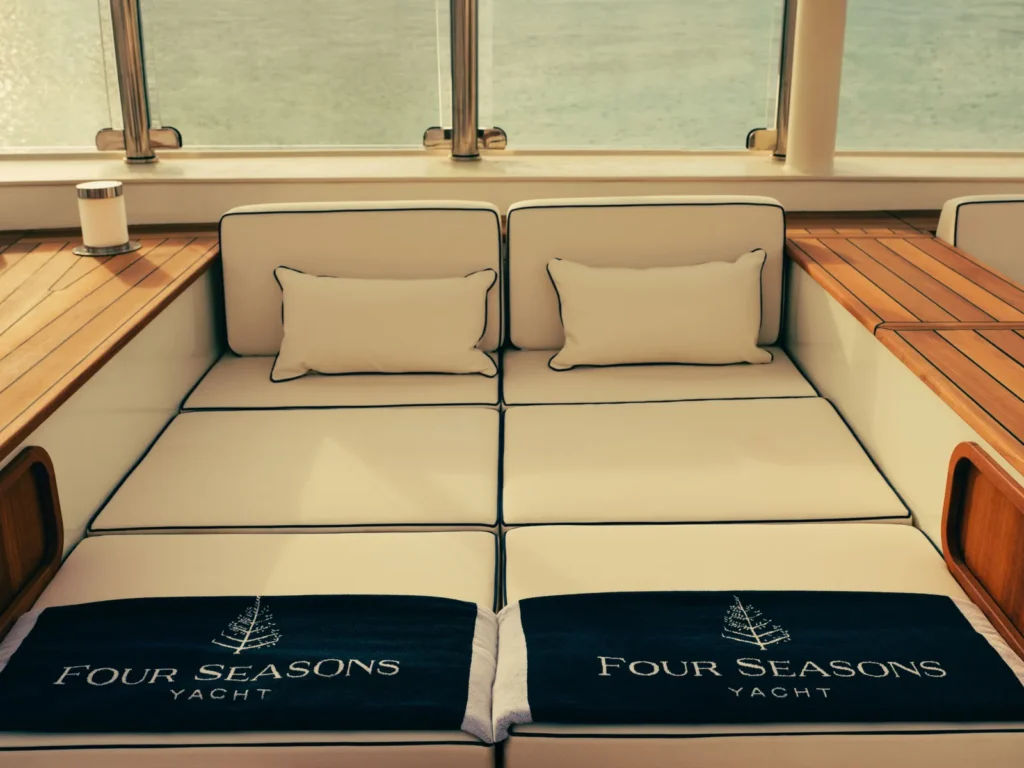
The one-to-one guest-to-staff ratio becomes most apparent in these details. Preferences are remembered, requests move seamlessly between departments and unexpected changes are handled without disrupting the rhythm of the voyage. The spacious accommodations encourage guests to slow down, while the abundance of dining, wellness and leisure options ensures that no two days need to look alike.
Four Seasons I ultimately makes a compelling argument for the yacht as the next great expression of modern luxury hospitality. It offers the privacy and intimacy of a private vessel while providing the culinary, wellness and service infrastructure of an exceptional resort. For travelers who once viewed life at sea as something separate from the world of contemporary luxury hotels, Four Seasons I may well change that perception. Here, the ocean is not simply the setting. It is the destination, the view, the playground and, increasingly, the hotel itself.