

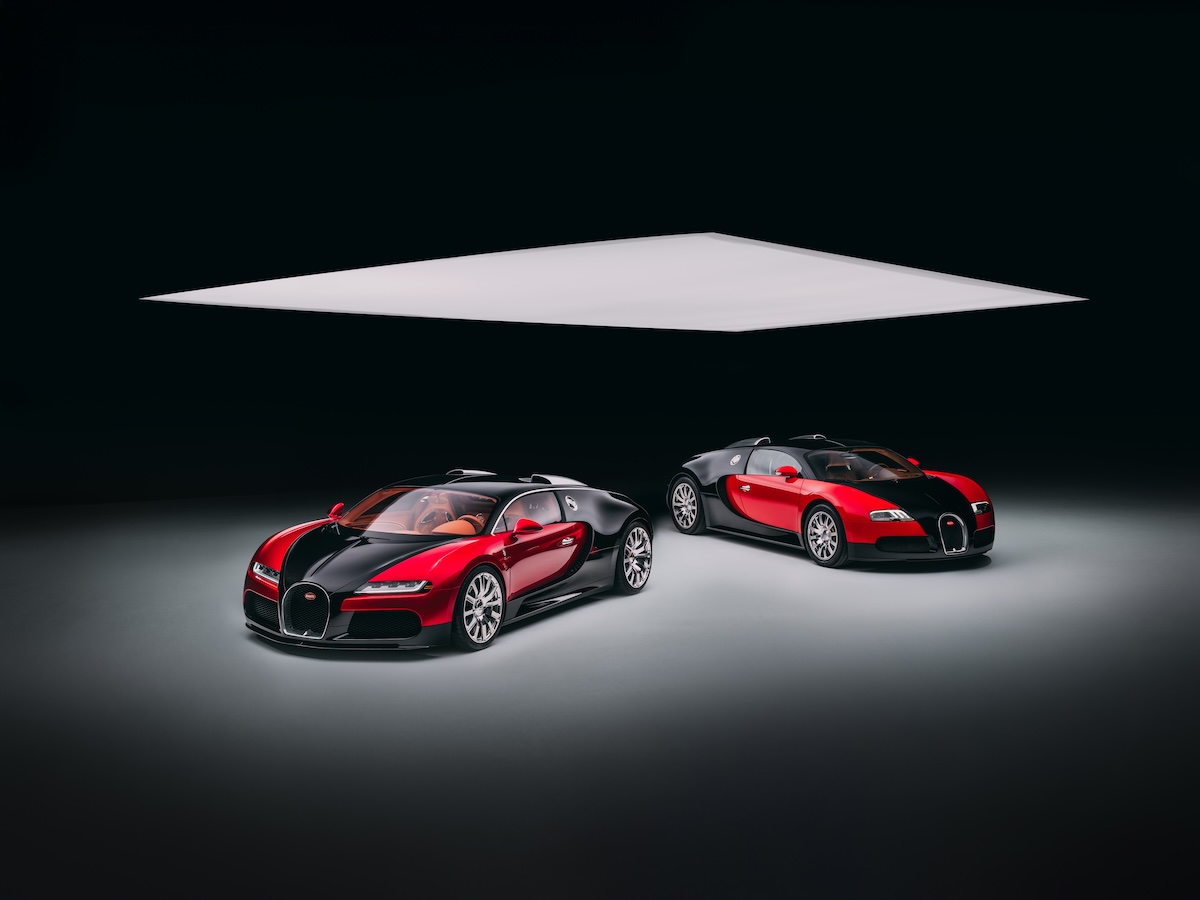

Bugatti has unveiled a measured and deeply symbolic homage to the Veyron its era defining hypercar and to the singular force of will behind its creation: Ferdinand Karl Piëch, the Volkswagen Group patriarch whose ambition redrew the boundaries of modern engineering.
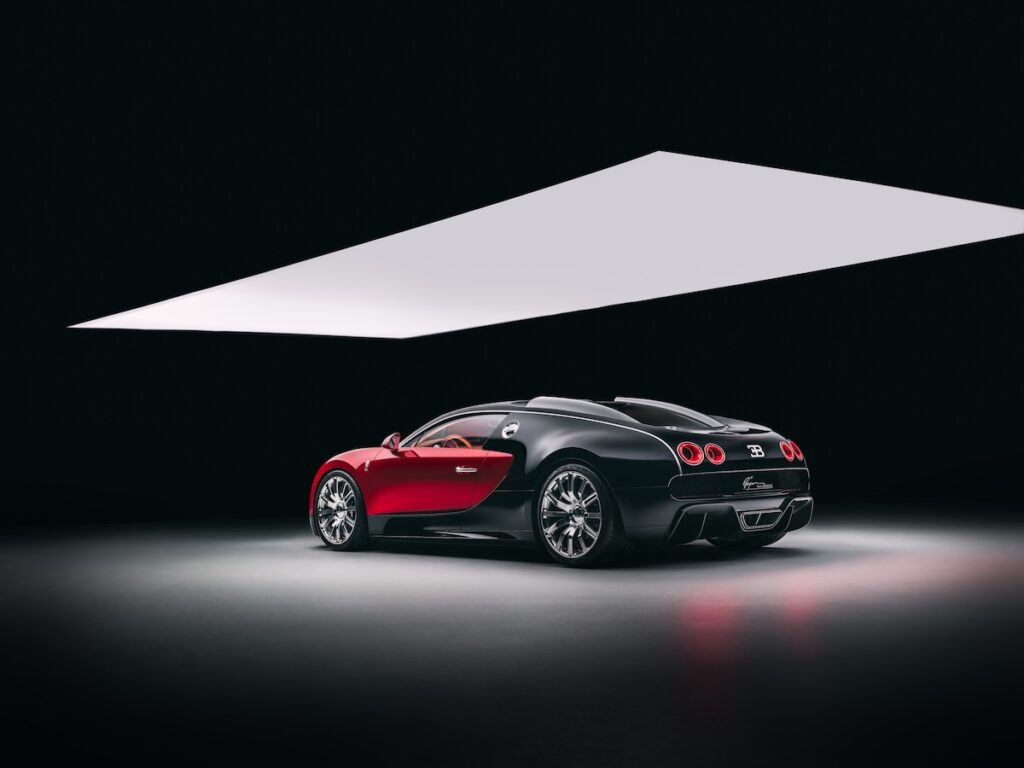
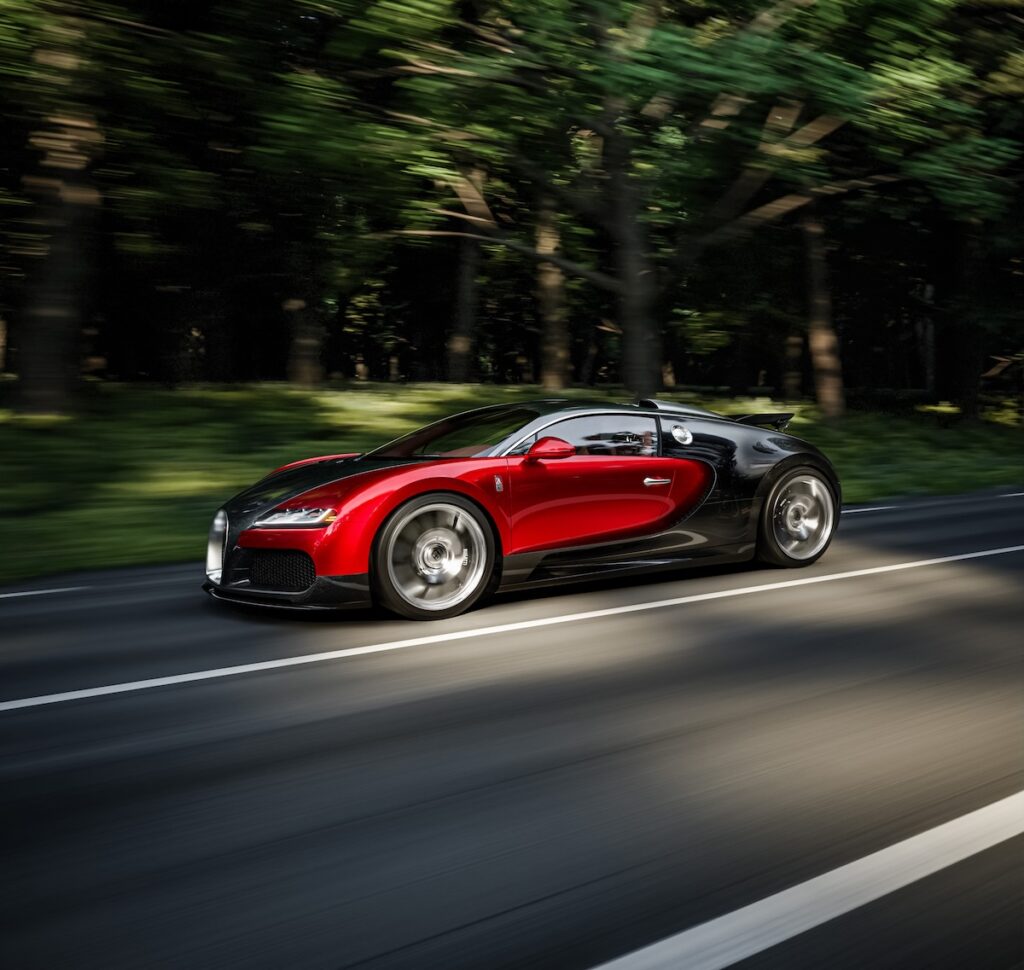
From a distance, the F.K.P. Hommage carries the unmistakable proportions of the original Veyron, the silhouette that shaped the hypercar conversation between 2005 and 2015. Yet closer inspection reveals a more nuanced intent. This is not a revival nor a reproduction, but a reverent reinterpretation one shaped by subtle shifts in surface, proportion, and detail, elevating the familiar into something more deliberate, more personal.
The origins of the Veyron itself trace back to an unlikely setting: a Japanese Shinkansen. It was aboard the bullet train that Piëch first sketched the concept of a radical engine configuration an idea that would go on to redefine automotive packaging. By that point, his authority within the Volkswagen Group was already unquestioned. He had reshaped engine development through the compact VR architecture, a lineage that began with the Golf’s VR6 and expanded into the W8 and W12 units that powered the group’s most refined sedans and grand tourers. The most audacious expression of that thinking would ultimately emerge as the quad-turbocharged W16.
The W16 was never conceived as an exercise in excess. It was an engineering solution of rare elegance astonishingly compact, densely efficient, and intellectually rigorous. By staggering its cylinders within a short, wide configuration, Bugatti’s engineers condensed what would normally be an unwieldy powerplant into a remarkably contained form. This breakthrough enabled a short wheelbase, balanced weight distribution, and permanent all wheel drive, all without compromising refinement. The result was unprecedented: a car that felt composed at any speed, equally capable of crossing continents in hushed comfort or redefining the outer limits of performance.
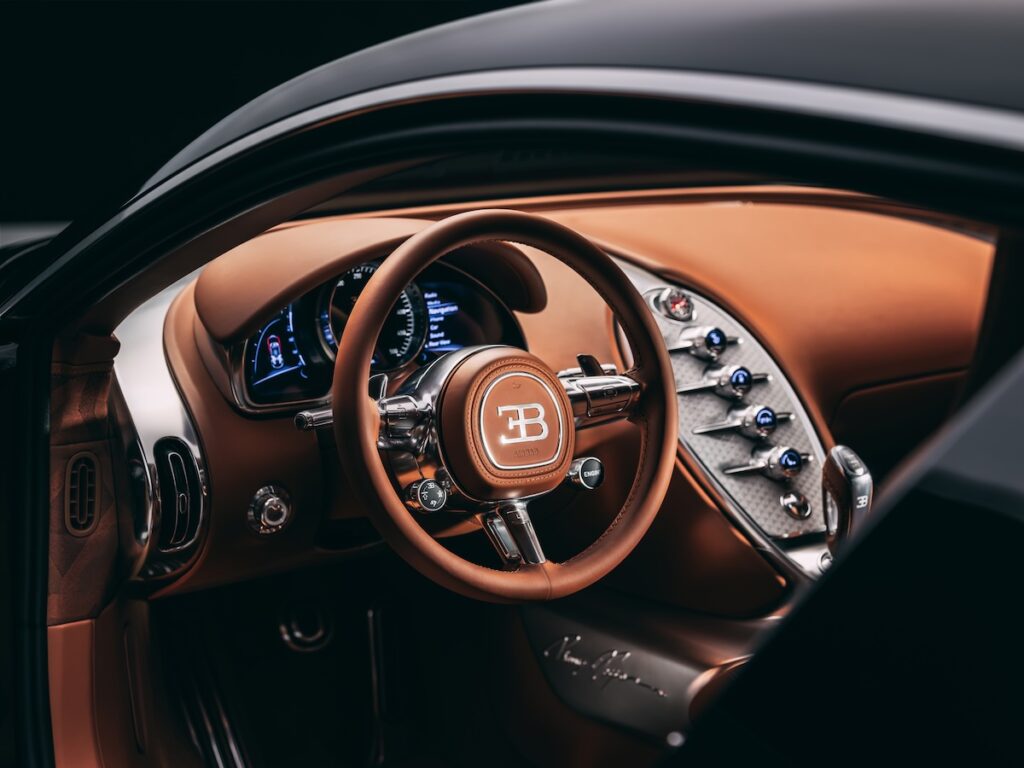
The F.K.P. Hommage builds upon that foundation using the most advanced evolution of Bugatti’s W16 platform. Beneath its bespoke bodywork lies the 1,600 horsepower quad turbocharged engine first introduced with the Chiron Super Sport widely regarded as the zenith of W16 development. Larger turbochargers, enhanced intercooling, advanced thermal management, and a reinforced gearbox combine to deliver immense performance with the same sense of control and composure that defined the original Veyron. This final iteration of the W16 carries a deeper symbolic resonance, fulfilling Piëch’s long held ambition to surpass the 300 mph threshold a quiet but decisive closing statement to one of the most consequential engineering chapters in modern automotive history.
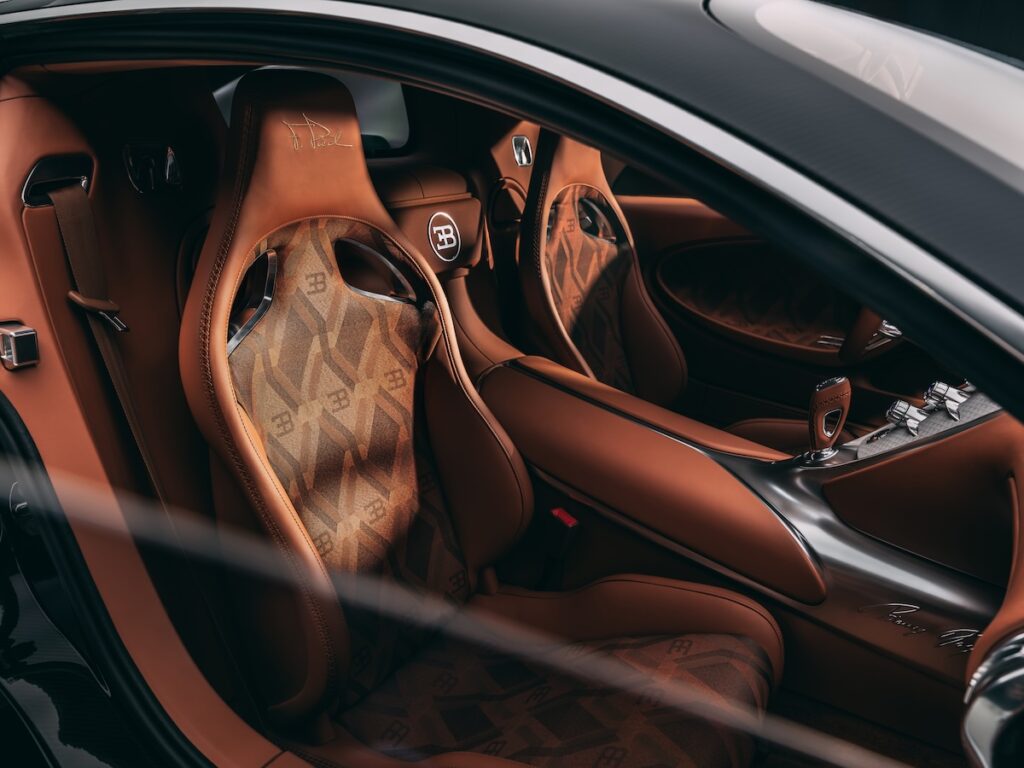
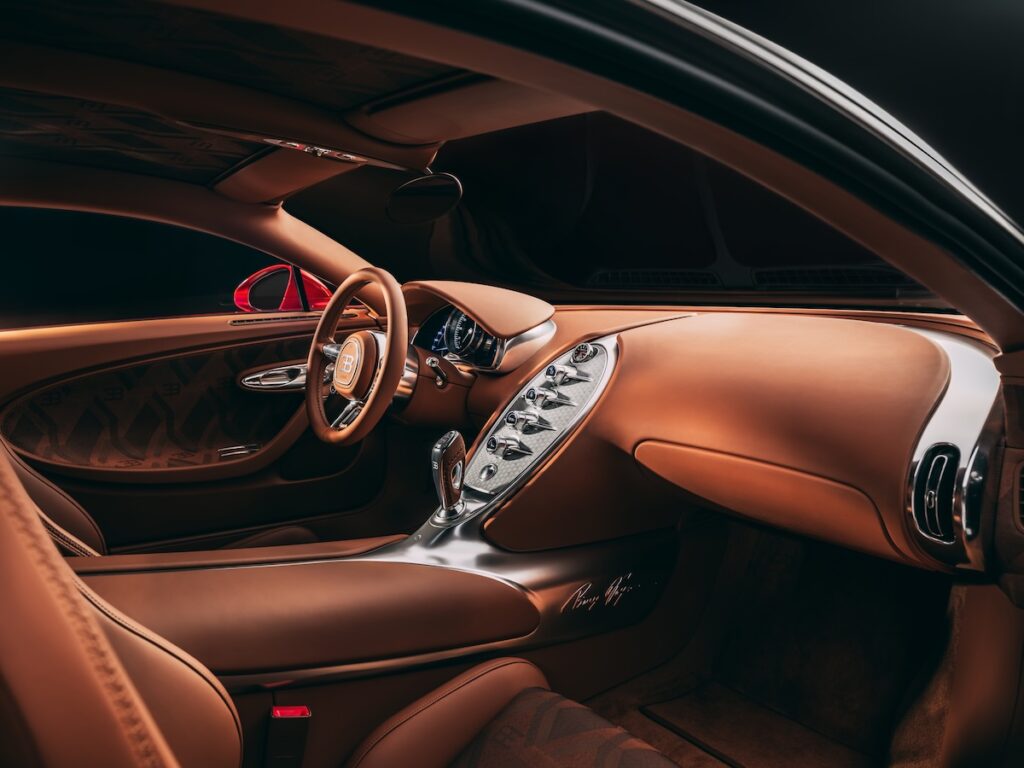
Inside, the narrative continues with equal discipline. A Bauhaus inspired steering wheel an understated nod to the original Veyron is paired with a bespoke center console and tunnel cover, each machined from solid blocks of aluminum. Custom textiles from Car Couture, woven exclusively in Paris, introduce a tactile depth unattainable through leather alone, elevating the cabin into a realm that feels more atelier than automobile.
At the center of the dashboard, Bugatti’s Programme Solitaire customization division has embedded an object of exceptional horological significance: an Audemars Piguet Royal Oak Tourbillon. The iconic octagonal timepiece is housed within a freestanding “island” finished in engine-turned polish a technique drawn directly from the hand-finished straight eight cylinder heads of Ettore Bugatti’s early racing engines. Rather than relying on electrical power, the watch operates via a bespoke self-winding mechanism: a gondola that rotates on a diagonal axis several times per hour, driven solely by the car’s movement.
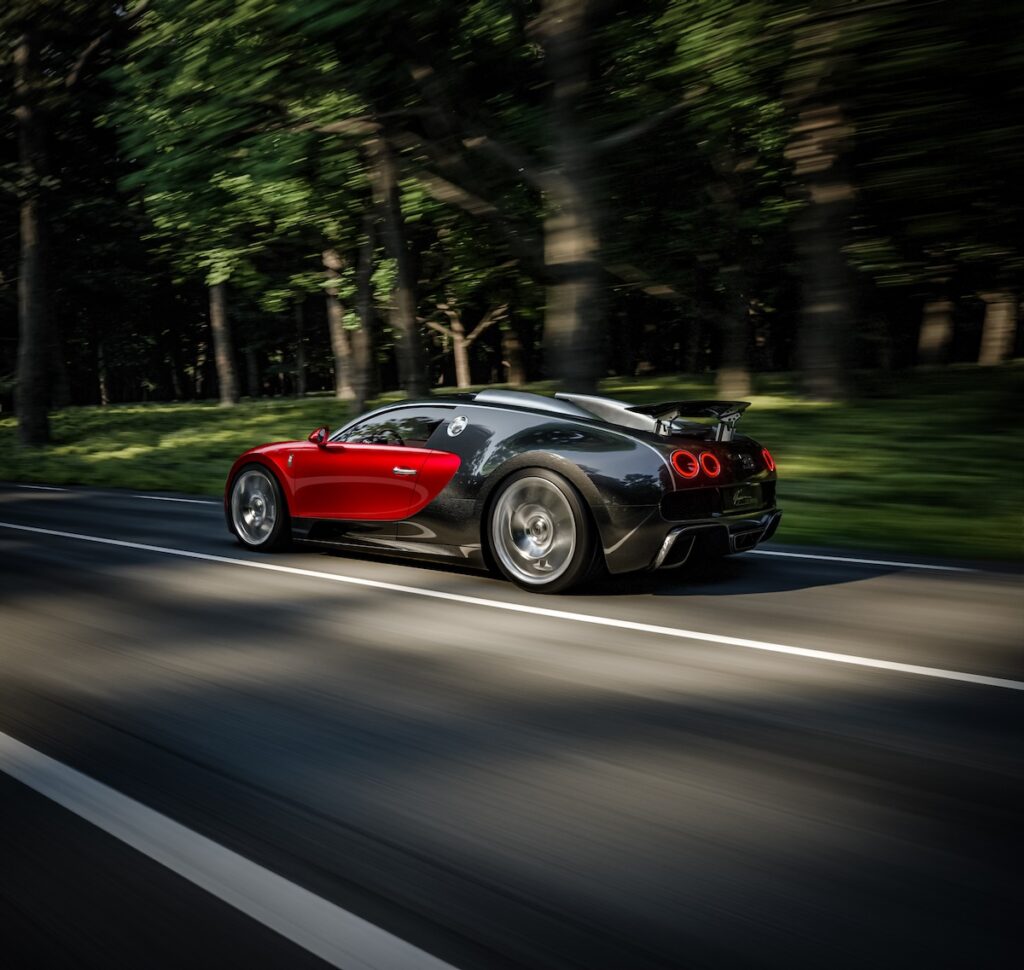
The one off Bugatti F.K.P. Hommage will make its physical debut at Ultimate Supercar Garage during Rétromobile Paris, on January 29 an appropriately discreet setting for a car that speaks less about spectacle, and more about legacy.